


Primary Source Verification
Every factual data point, code release, and regulatory filing cited is independently cross-referenced against original blockchain logs and public institutional disclosures.
Verified Research Desk Verified Topic Hub
Tether: Architecture, Governance & Market Dynamics
Source-linked reporting and research about Tether, including market context, technical details and documented risks.
Every factual data point, code release, and regulatory filing cited is independently cross-referenced against original blockchain logs and public institutional disclosures.
Analysis separates promotional marketing claims from verifiable transaction settlement, smart contract events, and transparent liquidity movements.
Detailed examination of private key management, smart contract access controls, multisig governance, and potential counterparty failure points.
Coverage contextualizes technological innovation within jurisdictional licensing boundaries, anti-money laundering mandates, and financial disclosure standards.
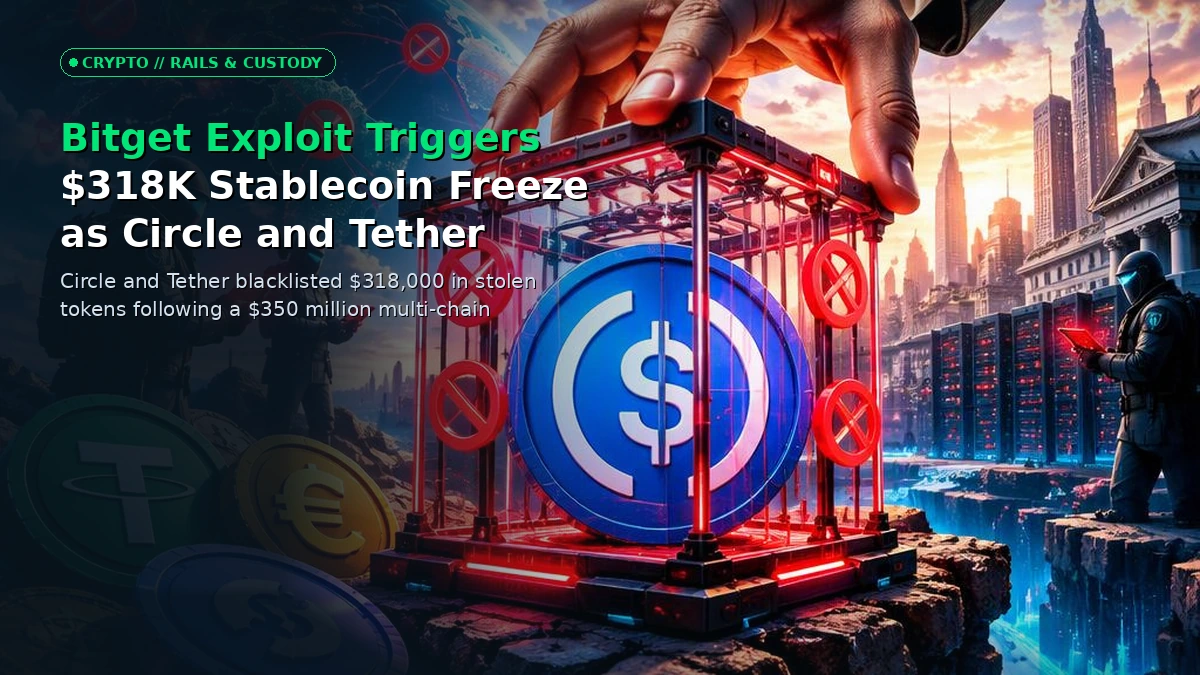
Circle and Tether blacklisted $318,000 in stolen tokens following a $350 million multi-chain exploit. The rapid intervention forces a new era of centralized asset containment.
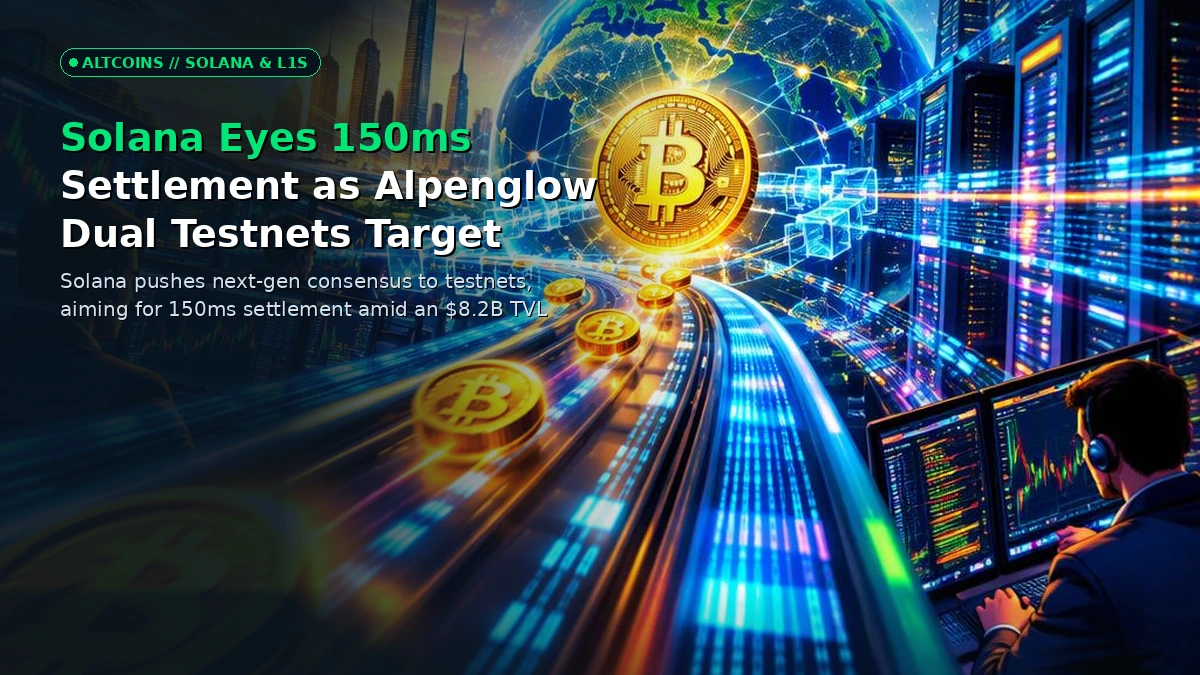
Solana pushes next-gen consensus to testnets, aiming for 150ms settlement amid an $8.2B TVL milestone. The upgrade bridges the latency gap for decentralized derivatives.
Wall Street sheds $1.2 trillion in institutional equity liquidations as benchmark US 10-year Treasury yields pierce 4.85%. Debt-servicing costs officially eclipse global capital expenditures on AI and defense.

Centralized exchange reserves have plunged to levels unseen since November 2018. A massive short squeeze now threatens aggressive bears as spot inventory dries up.
Ethereum validators lock 32 ETH in the consensus deposit contract to participate in proposing and attesting to transaction blocks. Misbehaving or offline validators face slashing and inactivity penalties, while honest validators earn block fees and staking rewards without requiring energy-intensive Proof-of-Work hardware.
EIP-1559 replaced traditional first-price gas auctions with a dynamic algorithmic base fee. Instead of paying fees entirely to miners or validators, the network permanently burns the base fee in ETH. When network transaction activity is high, burned fees exceed new validator staking issuance, reducing the net circulating ETH supply.
Rollups execute transactions off-chain in high-speed auxiliary environments and bundle hundreds of transactions into cryptographic proofs settled on Ethereum Layer 1. Optimistic rollups rely on fraud-proof challenge windows (e.g., Arbitrum, Optimism), while ZK-rollups utilize cryptographic validity proofs (e.g., zkSync, Starknet) for near-instant finality.
EIP-4844 introduced temporary cryptographic data containers called 'blobs' that exist for approximately 18 days rather than persisting permanently in Ethereum node memory. This provides Layer-2 rollups with dramatically cheaper data availability, cutting user gas fees on networks like Base, Arbitrum, and Optimism by over 90%.