
The Ethereum Virtual Machine (EVM)
The EVM deterministically executes Turing-complete bytecode across tens of thousands of validator nodes, with gas metering preventing execution loops and allocating block capacity.


Decentralized Compute & EVM Verified Topic Hub
Smart Contract Execution, Proof-of-Stake & Layer-2 Rollups
Ethereum provides the foundational decentralized computational substrate for the digital asset ecosystem, securing decentralized finance, stablecoins, and tokenized real-world assets.
The EVM deterministically executes Turing-complete bytecode across tens of thousands of validator nodes, with gas metering preventing execution loops and allocating block capacity.
Network security is guaranteed by validators who bond 32 ETH. Malicious behavior or double-signing triggers cryptographic slashing penalties that permanently destroy staked assets.
Rollups execute transactions off-chain at high speed and post cryptographic state proofs and data blobs to Ethereum mainnet, inheriting Layer-1 security without congesting block space.
Every Ethereum transaction burns a base gas fee rather than distributing it to validators, linking network economic throughput directly to deflationary asset supply dynamics.

Next-generation network architectures benchmark transaction finality, state access, and validator decentralization amidst expanding on-chain volume.

Daily transaction throughput across Arbitrum, Base, Optimism, and zkSync reached unprecedented levels as data availability improvements slashed settlement costs.
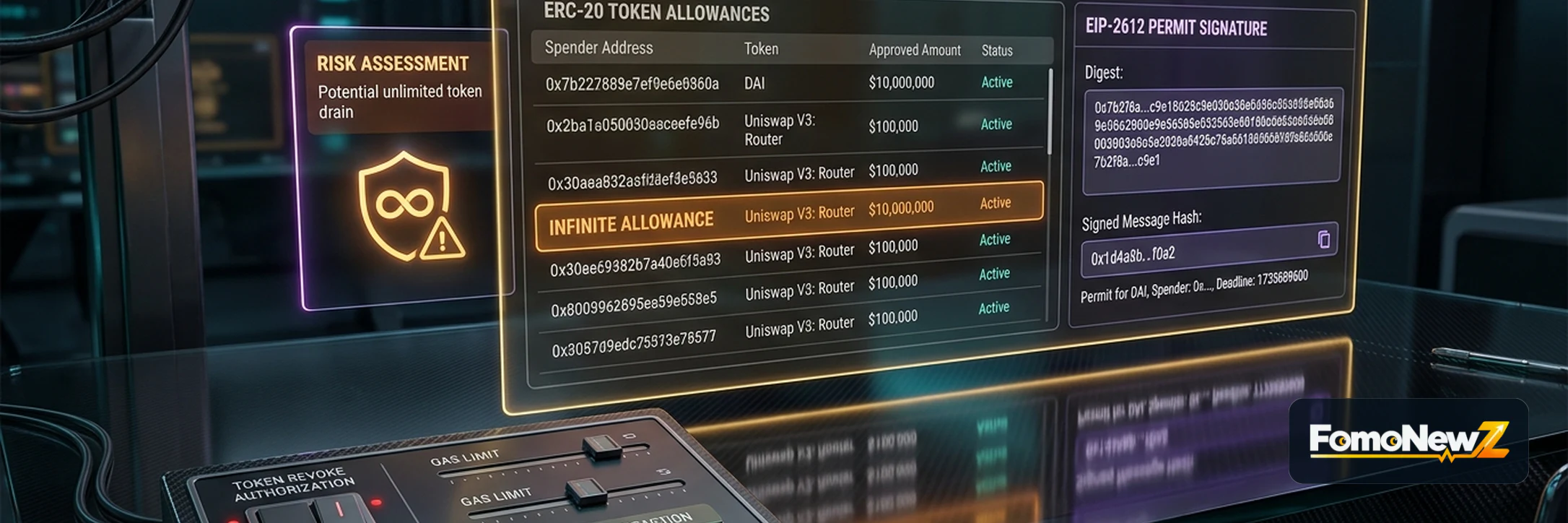
Smart contracts require authorization to interact with user tokens, but unbounded approvals and blind signatures create severe exposure. This guide explains ERC-20 allowances, EIP-2612 Permit messages, and how to verify permissions safely.
Layer-2 networks execute transactions off-chain, but their security depends on how they post data and settle on Ethereum L1. This guide breaks down blobs, proof systems, sequencers and bridge trust assumptions in clear technical terms.

A withdrawal address is not an exit button. Ethereum validators now have more flexible compounding and withdrawal options, but the credential type, network queues and provider terms still determine how funds move.

With Glamsterdam approaching mainnet and Hegotá being scoped, Ethereum's protocol teams are pairing scaling work with post-quantum security, formal verification and a simpler user experience.
Ethereum validators lock 32 ETH in the consensus deposit contract to participate in proposing and attesting to transaction blocks. Misbehaving or offline validators face slashing and inactivity penalties, while honest validators earn block fees and staking rewards without requiring energy-intensive Proof-of-Work hardware.
EIP-1559 replaced traditional first-price gas auctions with a dynamic algorithmic base fee. Instead of paying fees entirely to miners or validators, the network permanently burns the base fee in ETH. When network transaction activity is high, burned fees exceed new validator staking issuance, reducing the net circulating ETH supply.
Rollups execute transactions off-chain in high-speed auxiliary environments and bundle hundreds of transactions into cryptographic proofs settled on Ethereum Layer 1. Optimistic rollups rely on fraud-proof challenge windows (e.g., Arbitrum, Optimism), while ZK-rollups utilize cryptographic validity proofs (e.g., zkSync, Starknet) for near-instant finality.
EIP-4844 introduced temporary cryptographic data containers called 'blobs' that exist for approximately 18 days rather than persisting permanently in Ethereum node memory. This provides Layer-2 rollups with dramatically cheaper data availability, cutting user gas fees on networks like Base, Arbitrum, and Optimism by over 90%.