
BITCOIN
BREAKING: Solana speeds up blocks by 17%, but transaction capacity stays the sam
Solana speeds up blocks by 17%, but transaction capacity stays the same confirmed at 08:45 UTC, triggering immediate repricing across global risk corridors.


PRIMARY SOLANA NEWS DESK
HIGH THROUGHPUT. SUB-SECOND FINALITY. DEFI & MEME ENGINE.
Follow Solana news on SOL, network changes, applications, ecosystem activity and market developments with reporting and analysis from FomoNewz.
Solana speeds up blocks by 17%, but transaction capacity stays the same confirmed at 08:45 UTC, triggering immediate repricing across global risk corridors.

Solana speeds up blocks by 17%, but transaction capacity stays the same confirmed at 21:30 UTC, triggering immediate repricing across global risk corridors.
Automated liquidity bonding curve mechanisms transform retail token creation while creating unprecedented on-chain transaction velocity.

Next-generation network architectures benchmark transaction finality, state access, and validator decentralization amidst expanding on-chain volume.
01 / THE SOLANA DESK
Solana speeds up blocks by 17%, but transaction capacity stays the same confirmed at 08:45 UTC, triggering immediate repricing across global risk corridors.
Solana speeds up blocks by 17%, but transaction capacity stays the same confirmed at 21:30 UTC, triggering immediate repricing across global risk corridors.
Automated liquidity bonding curve mechanisms transform retail token creation while creating unprecedented on-chain transaction velocity.
Next-generation network architectures benchmark transaction finality, state access, and validator decentralization amidst expanding on-chain volume.
The independent C++ validator client developed by Jump Crypto successfully sustained high-throughput workloads during synchronized stress tests, proving resilience.
How self-custodial, decentralized wallets interface with blockchains: asymmetric cryptography, transaction signing pipelines, RPC communication, and approval threat mitigation.
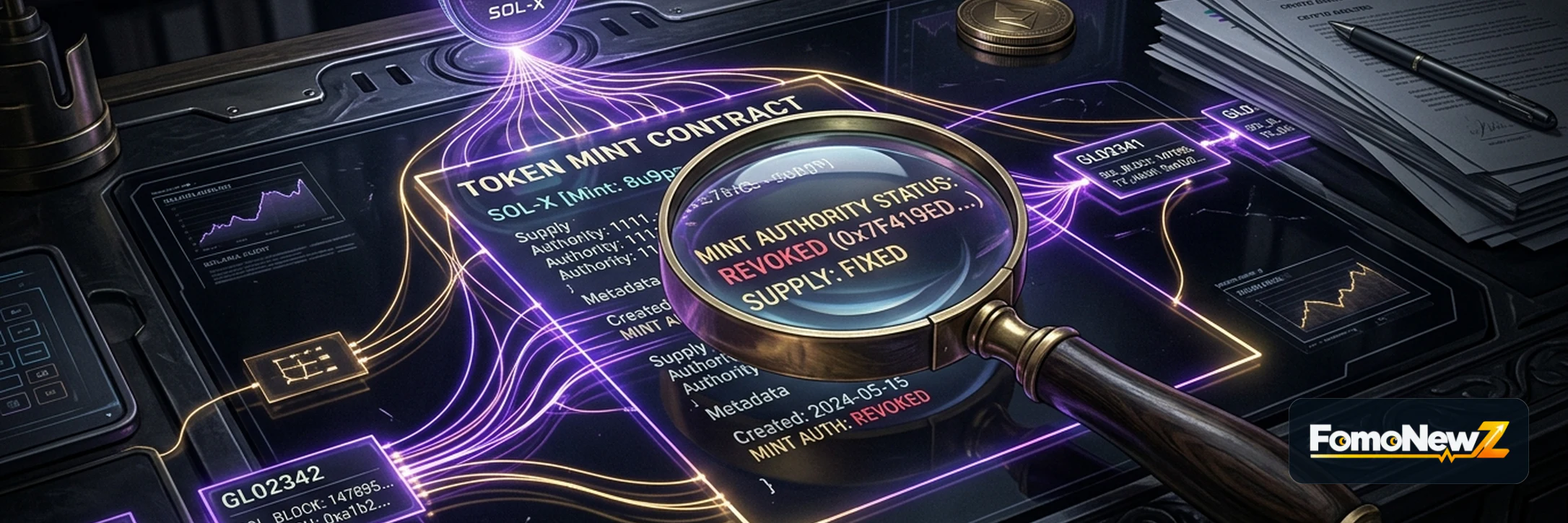
Solana token launches can be created in seconds, but hidden permissions can alter supply or freeze balances without warning. This guide explains how to verify mint revocation, freeze authority removal, and Token-2022 extensions on-chain.
Alpenglow proposes a substantial change to Solana consensus. Following it responsibly means distinguishing specifications, prerequisites, test results and an actual activation decision.
Faster slots are visible. The deeper story is coordinated change across Agave, Firedancer, validator admission and transaction delivery—and the operational risk of upgrading a live network.
A forensic methodology to audit exchange security postures, Merkle tree reserves, cold storage hygiene, and insolvency warning signs.
02 / THE SOLANA DESK
Jump Crypto C++ Client, QUIC Networking & Multi-Core Scaling
Analyze Solana's validator client decentralization and performance engineering. The introduction of Firedancer eliminates single-software vulnerability risks while scaling aggregate throughput.
Jump Crypto · Anza Agave · QUIC Stack| Client | Developer | Language | Network Role | Throughput Target | Deployment Status |
|---|---|---|---|---|---|
| Firedancer | Jump Crypto | C++ | Full Consensus Validator | 1,000,000+ TPS | Testnet Active / Frankendancer Mainnet |
| Agave | Anza Technology | Rust | Primary Production Client | ~5,000 TPS Sustained | Mainnet-Beta Baseline |
| Jito-Solana | Jito Foundation | Rust | MEV Boost & Bundles | Production Baseline | Over 80% Stake Weight |
| Sig | Syndica | Zig | High-Performance RPC | Read Acceleration | Development / Alpha |
Data compiled from official Solana Foundation engineering disclosures and GitHub client repositories.
4 clients03 / THE SOLANA DESK
DEX Market Share, Raydium Volumes & Token Extensions
Raydium. Jupiter. Extensions.
Driven by atomic order execution and negligible fee friction, Solana consistently matches or surpasses Ethereum mainnet in 24h DEX trading volume. Raydium, Orca, and Jupiter aggregate retail flow, bonding curve launches, and institutional liquidity.
Solana's Token Extensions (SPL-2022) provide compliant primitives—including zero-knowledge confidential transfers, permanent delegate authorities, and automated transfer hooks—attracting major payments leaders like PayPal (PYUSD) and Visa.
04 / THE SOLANA DESK
Technical Structure, Fee Burn Dynamics & Ecosystem Velocity
Solana's valuation reflects transaction throughput, MEV tip distribution to stakers, active daily wallet creation, and retail liquidity velocity. FomoNewZ provides institutional telemetry across fee burns, priority fee dynamics, and validator health.
05 / THE SOLANA DESK
Non-custodial setups, Ledger hardware integration, and Phantom/Solflare configuration.
FIELD GUIDE / 02Ed25519 signature security, BIP-39 paper backups, and cold-vault isolation.
FIELD GUIDE / 03Constant product market makers, concentrated liquidity, and execution routing.
FIELD GUIDE / 04Delegated Proof-of-Stake, liquid staking tokens (JitoSOL, mSOL), and tip distribution.
06 / THE SOLANA DESK
Firedancer throughput, Proof of History synchronization, and token extensions.
Visit our comprehensive FAQ hubFiredancer is an independent validator software client built from scratch in C++ by Jump Crypto. By optimizing the networking stack with QUIC and maximizing hardware parallelization, it aims to deliver over 1 million transactions per second (TPS) on testnets while ensuring client diversity.
Proof of History is a cryptographic verifiable delay function (VDF) that creates a cryptographically verifiable order of events before consensus is reached. This removes the latency overhead of network-wide node communication, maintaining consistent ~400-millisecond block intervals.
Token Extensions (formerly SPL-2022) provide native programmable features at the protocol level, including Zero-Knowledge confidential transfers, interest-bearing tokens, and compliance transfer hooks designed for institutional tokenization.
Solana's execution scheduler isolates priority fee spikes to specific contended state accounts. A viral meme-coin trade or NFT mint on Raydium increases fees only for interactions with that specific pool, leaving payments and other DeFi applications completely unaffected.
FomoNewZ news reporting and on-chain analytics are derived strictly from verifiable primary sources, including public Solana validator gossip telemetry, Solana Foundation engineering disclosures, and raw on-chain state. FomoNewZ does not provide investment or financial advice.