


Primary Source Verification
Every factual data point, code release, and regulatory filing cited is independently cross-referenced against original blockchain logs and public institutional disclosures.
Verified Research Desk Verified Topic Hub
Regulation: Architecture, Governance & Market Dynamics
Source-linked reporting and research about Regulation, including market context, technical details and documented risks.
Every factual data point, code release, and regulatory filing cited is independently cross-referenced against original blockchain logs and public institutional disclosures.
Analysis separates promotional marketing claims from verifiable transaction settlement, smart contract events, and transparent liquidity movements.
Detailed examination of private key management, smart contract access controls, multisig governance, and potential counterparty failure points.
Coverage contextualizes technological innovation within jurisdictional licensing boundaries, anti-money laundering mandates, and financial disclosure standards.

Financial watchdogs accelerate pressure on domestic trading platforms. Exchanges face strict reserve mandates following the historic $6.3 billion security breach.

CFTC Chair Michael Selig is spearheading a legislative push for mandatory U.S. registration following the $6.4B Binance breach. Bitcoin hovers near $78,750 as markets weigh the regulatory fallout.

Centralized stablecoin issuers executed a coordinated $3B asset freeze, stopping Binance exploiters from draining decentralized liquidity pools.

Emergency blacklisting protocols lock $823 million in stablecoins as federal authorities launch high-stakes exploit investigations. Bitcoin holds $78,750 as smart contract vulnerabilities shake institutional trust.

Tether and Circle neutralized $1.8 billion in digital dollars in under sixty minutes. The rapid multi-chain intervention exposed the raw centralization power embedded within token governance.

The CFTC convened an emergency forum as autonomous AI agents execute billions in daily algorithmic trades. Regulators race to plug security gaps in x402 standards.

Treasury Secretary Scott Bessent has advanced a regulatory workaround to bypass the stalled Bitcoin Clarity Act. The executive move immediately ignites a high-stakes turf war with federal financial regulators.

A massive $24M Polymarket surge on Democratic House control is threatening the Bitcoin Clarity Act. Committee chairs are scrambling to salvage statutory crypto frameworks.

Legislative gridlock on Capitol Hill drives institutional Bitcoin capital and custody market share toward Asia and the Middle East. Regional financial centers position to capture $100B in banking efficiency.

Federal regulators target $300 billion in tokenized real-world assets and stablecoin rails as corporate holdouts reject automated compliance mandates. Yield compression threatens institutional market makers navigating global capital friction.

Bitcoin developers rush quantum-resistant BIP upgrades as the SEC embeds cryptographic risk into 2027 examination priorities. Whale wallets reposition amid shifting regulatory threats.

The Central Bank of Ireland penalizes Coinbase €3.6 million following a probe into client fund safeguarding during Silvergate Bank's collapse. The enforcement highlights severe correspondent banking vulnerabilities.

US Senate banking committees deadlock over Federal Reserve custody versus state vaults for the Strategic Bitcoin Reserve. Institutional inflows top $1 billion weekly.

Chinese prosecutors launch aggressive cross-border proceedings to reclaim 61,800 BTC tied to a massive shadow banking fraud. The move follows a landmark UK High Court ruling recognizing domestic victim restitution claims.

The French National Assembly approved a 31% capital gains tax on stablecoins, stripping MiCA protections. European settlement rails face instant compliance repricing.

Mastercard unveils a native risk-screening layer to intercept fraud and sanctions evasion across $1.6 trillion in on-chain settlement volume. The compliance rollout forces enterprise treasury desks to overhaul operational stacks.

The House Financial Services Committee voted 35-15 to advance landmark legislation formalizing SEC and CFTC jurisdictional boundaries for digital assets.

Financial Services Regulatory Authority approves expanded institutional permissions covering custody, multilateral trading facilities, and prime services.

Federal commodity regulator details anti-fraud authority over leveraged digital asset contracts marketed to United States retail counterparties.

Judicial panel considers arguments on whether immutable software code deployed to public blockchains constitutes sanctionable property under IEEPA.

New regulatory advisory specifies risk-based screening controls, automated address monitoring, and attribution standards for institutional wallet infrastructure.
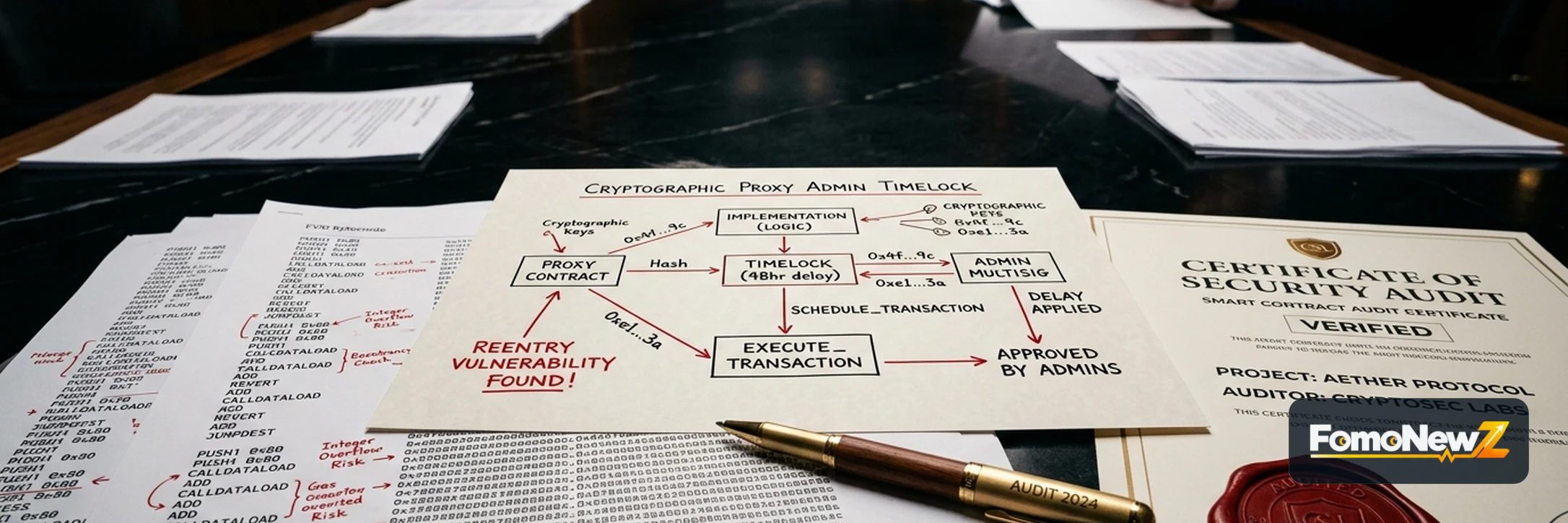
Statutory provisions protect decentralized open-source contributors from broker-dealer classification while establishing objective metrics for protocol maturation.
Bipartisan committee compromise defines statutory jurisdictional lines between investment contract disclosures and exclusive spot commodity oversight.
Regulators assess token economic structure and distribution methods. In the United States, the SEC applies the four-prong Howey Test: an investment of money, in a common enterprise, with a reasonable expectation of profits, derived primarily from the managerial or entrepreneurial efforts of others. If a token is sufficiently decentralized with no coordinating sponsor, it shifts toward commodity classification.
The EU's Markets in Crypto-Assets (MiCA) regulation is the world's first unified, comprehensive digital-asset legal framework. It establishes strict reserve and disclosure rules for stablecoin issuers (ARTs and EMTs), establishes mandatory licensing for Crypto-Asset Service Providers (CASPs), and allows approved firms to 'passport' services across all 27 EU member states.
The FATF Travel Rule requires Virtual Asset Service Providers (VASPs)—including exchanges and brokers—to obtain and transmit originator and beneficiary personal identifying information alongside cryptocurrency transactions above designated thresholds (typically $1,000 or €1,000) to combat money laundering and counter-terrorist financing.
Federal market structure bills, including the Financial Innovation and Technology for the 21st Century Act (FIT21) and the CLARITY Act, create clear statutory boundaries: the SEC retains oversight of digital asset securities and primary capital formation, while the CFTC receives explicit supervisory authority over cash/spot digital commodity markets once protocols achieve mathematical decentralization.
Leading legislative proposals and judicial precedents increasingly differentiate between custodial intermediaries (brokers, centralized exchanges) and non-custodial protocol developers, miners, and validators. Under statutory safe harbors, individuals who merely write open-source code or validate raw network transactions without handling client private keys are excluded from broker-dealer and money transmitter obligations.
ADGM operates as an international financial free zone governed by English Common Law and its dedicated Financial Services Regulatory Authority (FSRA). The FSRA was among the world's first regulators to enact a comprehensive virtual asset framework in 2018, licensing Multilateral Trading Facilities (MTF), institutional custodians, and decentralized foundations under strict capital adequacy standards.