
Primary Source Verification
Every factual data point, code release, and regulatory filing cited is independently cross-referenced against original blockchain logs and public institutional disclosures.


Verified Research Desk Verified Topic Hub
Readersecurity: Architecture, Governance & Market Dynamics
Source-linked reporting and research about Readersecurity, including market context, technical details and documented risks.
Every factual data point, code release, and regulatory filing cited is independently cross-referenced against original blockchain logs and public institutional disclosures.
Analysis separates promotional marketing claims from verifiable transaction settlement, smart contract events, and transparent liquidity movements.
Detailed examination of private key management, smart contract access controls, multisig governance, and potential counterparty failure points.
Coverage contextualizes technological innovation within jurisdictional licensing boundaries, anti-money laundering mandates, and financial disclosure standards.

Asset managers are restructuring custody workflows ahead of XRP Ledger’s Batch V1.1 payments release. The upgrade introduces atomic multi-asset settlement to eliminate execution risk.
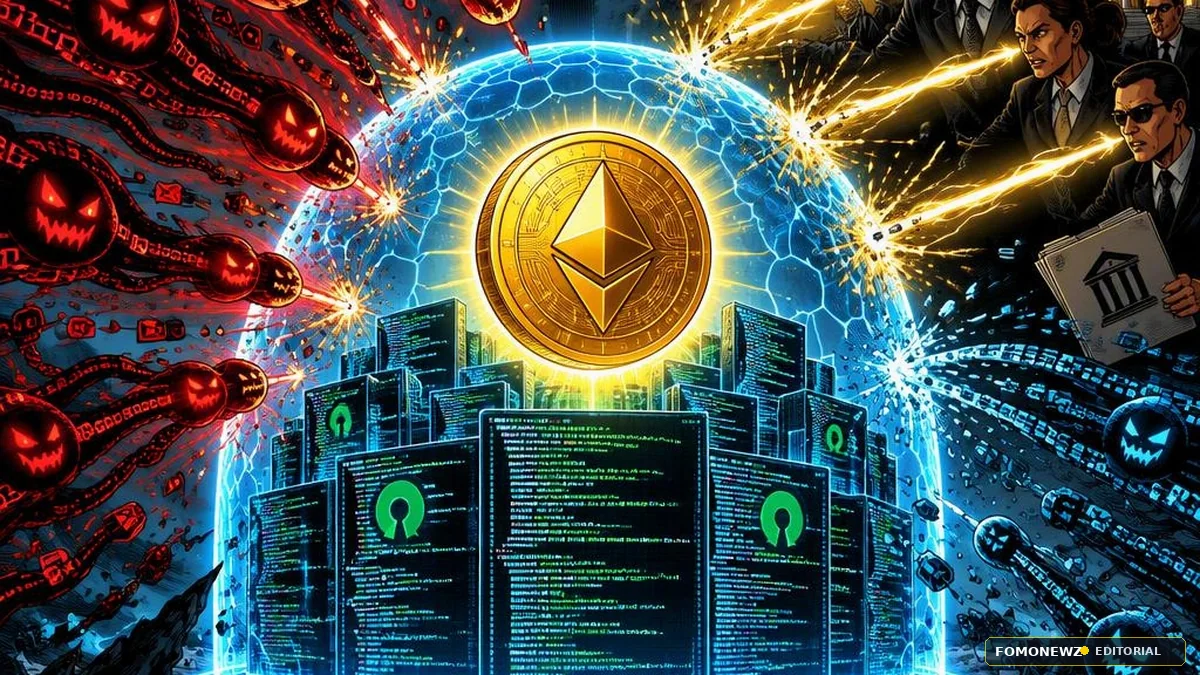
Ethereum co-founder Vitalik Buterin argues autonomous AI models will strengthen blockchain security via formal software proofs. Institutional markets recalibrate systemic DeFi code risk.

Digital credit infrastructure could scale past Bitcoin's $1.5 trillion baseline. UTXO's Dan Hillery dissects how institutional debt instruments are unlocking dormant collateral pools.

The U.S. Treasury blacklisted Tehran-based BitBank for processing maritime transit tolls through digital assets. The action reveals Iranian military units monetizing global oil chokepoints via crypto rails.
Regulators assess token economic structure and distribution methods. In the United States, the SEC applies the four-prong Howey Test: an investment of money, in a common enterprise, with a reasonable expectation of profits, derived primarily from the managerial or entrepreneurial efforts of others. If a token is sufficiently decentralized with no coordinating sponsor, it shifts toward commodity classification.
The EU's Markets in Crypto-Assets (MiCA) regulation is the world's first unified, comprehensive digital-asset legal framework. It establishes strict reserve and disclosure rules for stablecoin issuers (ARTs and EMTs), establishes mandatory licensing for Crypto-Asset Service Providers (CASPs), and allows approved firms to 'passport' services across all 27 EU member states.
The FATF Travel Rule requires Virtual Asset Service Providers (VASPs)—including exchanges and brokers—to obtain and transmit originator and beneficiary personal identifying information alongside cryptocurrency transactions above designated thresholds (typically $1,000 or €1,000) to combat money laundering and counter-terrorist financing.
Federal market structure bills, including the Financial Innovation and Technology for the 21st Century Act (FIT21) and the CLARITY Act, create clear statutory boundaries: the SEC retains oversight of digital asset securities and primary capital formation, while the CFTC receives explicit supervisory authority over cash/spot digital commodity markets once protocols achieve mathematical decentralization.
Leading legislative proposals and judicial precedents increasingly differentiate between custodial intermediaries (brokers, centralized exchanges) and non-custodial protocol developers, miners, and validators. Under statutory safe harbors, individuals who merely write open-source code or validate raw network transactions without handling client private keys are excluded from broker-dealer and money transmitter obligations.
ADGM operates as an international financial free zone governed by English Common Law and its dedicated Financial Services Regulatory Authority (FSRA). The FSRA was among the world's first regulators to enact a comprehensive virtual asset framework in 2018, licensing Multilateral Trading Facilities (MTF), institutional custodians, and decentralized foundations under strict capital adequacy standards.