
Primary Source Verification
Every factual data point, code release, and regulatory filing cited is independently cross-referenced against original blockchain logs and public institutional disclosures.


Verified Research Desk Verified Topic Hub
Memecoins: Architecture, Governance & Market Dynamics
Source-linked reporting and research about Memecoins, including market context, technical details and documented risks.
Every factual data point, code release, and regulatory filing cited is independently cross-referenced against original blockchain logs and public institutional disclosures.
Analysis separates promotional marketing claims from verifiable transaction settlement, smart contract events, and transparent liquidity movements.
Detailed examination of private key management, smart contract access controls, multisig governance, and potential counterparty failure points.
Coverage contextualizes technological innovation within jurisdictional licensing boundaries, anti-money laundering mandates, and financial disclosure standards.

Trump tariff announcements trigger a sharp pullback across crypto majors as Bitcoin slides to $91,100. Simultaneously, institutional market structure accelerates with NYSE tokenization and onchain meme velocity.
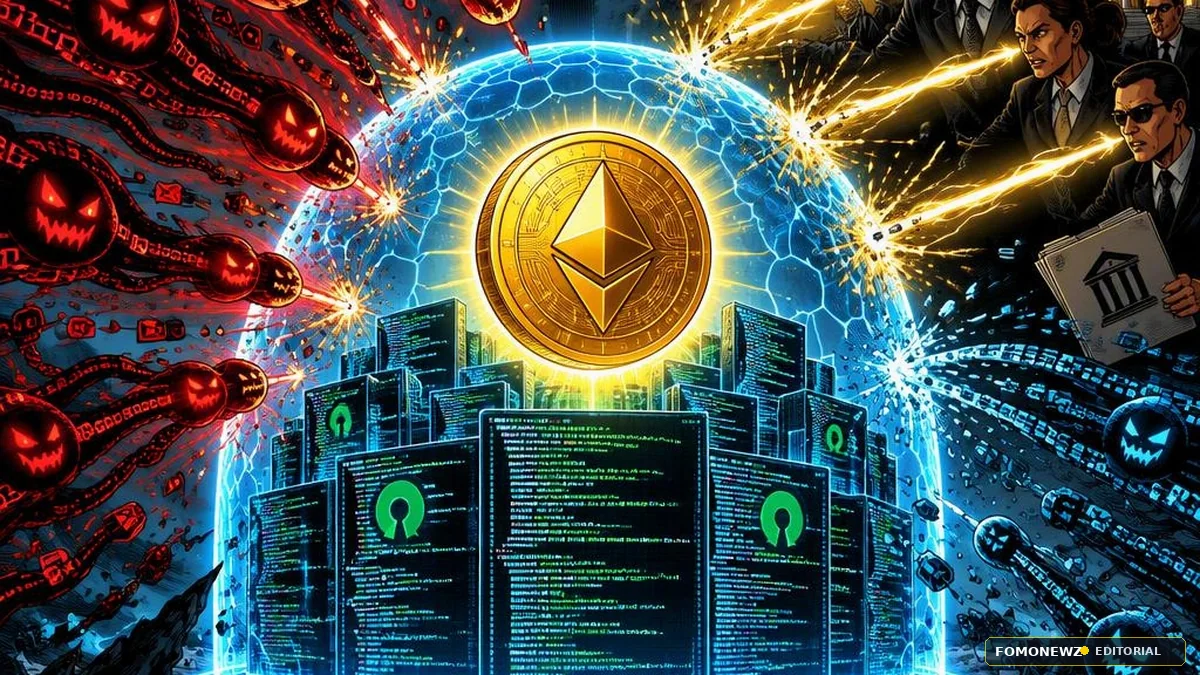
Ethereum co-founder Vitalik Buterin argues autonomous AI models will strengthen blockchain security via formal software proofs. Institutional markets recalibrate systemic DeFi code risk.

Zcash rallied double digits to touch $1,385 following a decisive community vote on the NU7 upgrade. The decision solidifies algorithmic scarcity while forcing massive short-coverings across major venues.

Digital credit infrastructure could scale past Bitcoin's $1.5 trillion baseline. UTXO's Dan Hillery dissects how institutional debt instruments are unlocking dormant collateral pools.
Meme coins derive primary market value from community virality, social media sentiment, and cultural memes rather than underlying software cash flows or protocol fees. While utility tokens like ETH or SOL subsidize distributed computation, meme coins function predominantly as hyper-liquid speculative instruments driven by narrative momentum.
Bonding curves use automated mathematical formulas where token prices rise predictably as market participants purchase tokens from the contract reserve. Once cumulative purchases achieve a predetermined capital threshold (such as $69,000 or $100,000 market cap), the contract automatically migrates reserves to a decentralized exchange (like Raydium or Uniswap) and burns the liquidity provider (LP) tokens permanently.
Critical warning signs include unrevoked mint authorities (allowing deployers to create infinite tokens), unburned liquidity provider tokens, blacklisting functions, high transfer taxes (honeypots), and heavy wallet cluster concentrations where deployer insider groups control more than 15-20% of circulating supply.
Locked or burned liquidity ensures the original deployer cannot withdraw the backing cryptocurrency (SOL, ETH) from the liquidity pool, leaving buyers with unsellable tokens. Verifying that 100% of LP tokens are sent to a verifiable burn address (e.g., 0x000...dead) or locked in audited time-lock smart contracts is the foundational baseline for public trading.
Circulating market cap measures the current token price multiplied exclusively by available, liquid tokens in open circulation. Fully Diluted Valuation (FDV) measures the theoretical market capitalization if 100% of the maximum token supply were unlocked. In meme coins, large disparities between market cap and FDV indicate future dilution risk from team vesting unlocks.
Many meme tokens implement custom transfer fees (such as 5% marketing or burn fees) encoded into their smart contracts. Combined with priority blockchain gas fees, MEV sandwich-bot attacks, and slippage tolerance during violent price moves, round-trip trading costs can exceed 10-15%, requiring substantial price expansion just to break even.