


Chapter 01
The Great Architectural Divergence in Layer-1 Networks
The competition among alternative Layer-1 blockchain ecosystems has reached a major turning point, driven by fundamentally opposing engineering philosophies: integrated monolithic systems versus decoupled modular execution stacks. As global decentralized finance transaction volumes and institutional asset tokenization expand, network protocols are benchmarking throughput under real-world stress.
Proponents of monolithic architectures, led by networks like Solana and next-generation parallelized Virtual Machine implementations such as Monad and Aptos, argue that maintaining execution, settlement, consensus, and data availability within a single optimized software stack minimizes composability latency and eliminates cross-chain bridge security vulnerabilities.
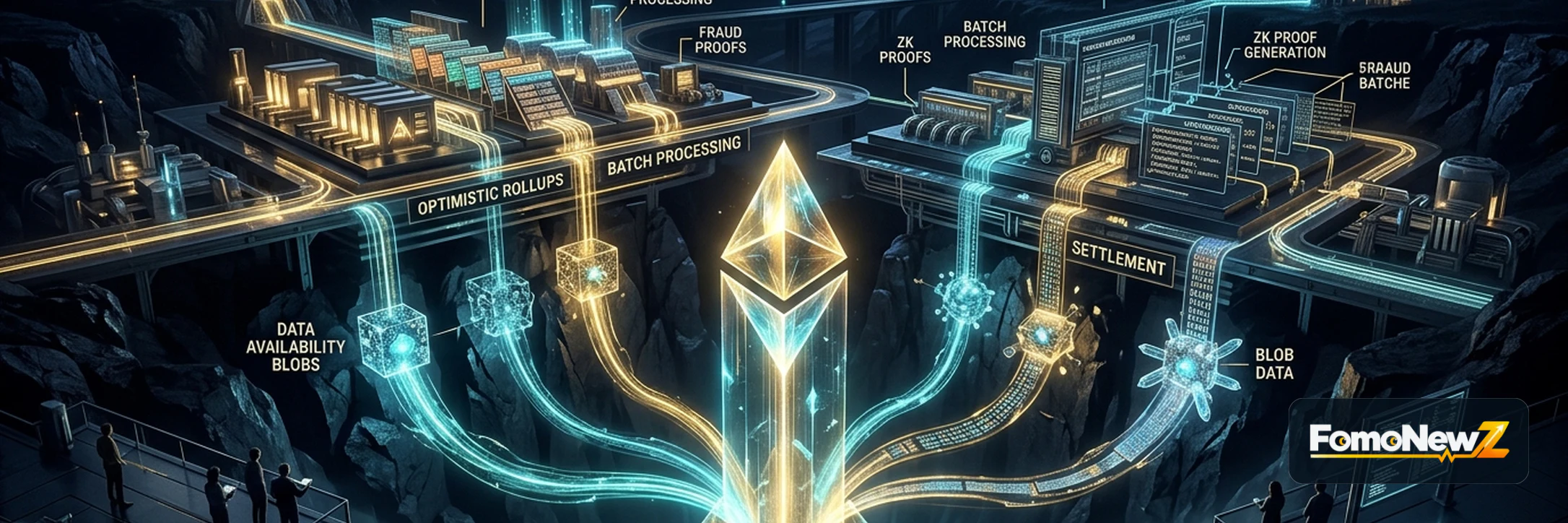
Conversely, advocates of modular designs—anchored by Ethereum's rollup-centric roadmap, Celestia, and specialized data availability layers—contend that unbundling core blockchain functions enables specialized horizontal scaling, lower hardware requirements for independent node operators, and superior long-term cryptographic decentralization.
This architectural competition has sparked a resurgence in protocol engineering research, pushing developers to redefine consensus efficiency, state storage algorithms, and execution throughput across the entire altcoin ecosystem.
Leading researchers note that real-world network resilience under hostile mempool load is becoming the true benchmark of blockchain architecture.
Chapter 02
Parallel Execution Engines and Asynchronous State Access
At the cutting edge of altcoin software development is the widespread implementation of parallelized transaction execution. Traditional blockchain virtual machines, such as the legacy Ethereum Virtual Machine (EVM), process transactions sequentially in a single-threaded queue to prevent conflicting state changes.
Modern alternative protocols utilize optimistic concurrency control and hardware-accelerated memory architectures to analyze transaction dependency graphs before execution. Non-conflicting transactions—such as token transfers between unrelated accounts—are processed concurrently across multi-core server processors, multiplying sustained throughput from dozens of transactions per second to thousands.
Engineering benchmarks demonstrate that parallelized execution environments achieve sub-second finality while drastically lowering gas fees, making high-frequency decentralized financial order books and complex on-chain gaming technically viable.
Database engineers are implementing custom asynchronous disk access layers that allow transaction executors to read and write account states concurrently without locking up memory pipelines.
Chapter 03
Validator Economics and Hardware Decentralization Trade-Offs
The race for ultra-high throughput has introduced critical trade-offs regarding validator decentralization and operational economics. High-performance monolithic chains require enterprise-grade hardware specifications, including multi-gigabit network bandwidth, high-frequency enterprise CPUs, and terabytes of NVMe storage to handle continuous state bloat.
Critics argue that high hardware barriers concentrate validator clusters within major commercial data centers, potentially exposing networks to localized cloud outages or regulatory pressure points. In response, protocol developers are introducing state-expiry proposals, zero-knowledge state compression, and light-client verification tools to ensure that independent participants can audit ledger state without massive hardware investments.
The economic balance between transaction fees, validator staking yields, and ongoing hardware depreciation remains a central focus for token modelers evaluating long-term network sustainability.
Chapter 04
Developer Migration and Capital Allocation Dynamics
On-chain developer activity data indicates healthy multichain migration, with developer teams deploying applications simultaneously across multiple alternative Layer-1 networks to access diverse liquidity pools. Cross-chain development frameworks and generalized programming environments have reduced the friction of translating smart contract logic between Rust, Move, and Solidity.
Venture capital allocations have similarly shifted from speculative narrative funding to rigorous infrastructure performance audits, with institutional funds prioritizing projects demonstrating verifiable fee generation, active decentralized exchange volume, and genuine daily active user retention.
Ecosystem incentive programs and developer grant foundations are focusing heavily on attracting core financial primitives, including native stablecoin issuers, institutional lending markets, and reliable decentralized oracle infrastructure.
Developers report that robust software development kits (SDKs) and standardized local testing harnesses are often more influential in platform selection than theoretical peak throughput metrics.
Chapter 05
Long-Term Outlook for the Multi-Chain Ecosystem
Industry consensus increasingly concludes that the digital asset landscape will not be dominated by a single winner-take-all network, but rather will evolve into an interconnected multi-chain ecosystem where specialized blockchains optimize for distinct commercial use cases.
High-throughput parallelized chains are capturing retail trading, consumer payments, and interactive social applications, while established settlement layers retain dominance in high-value institutional settlement, sovereign debt tokenization, and long-term capital preservation.
As interoperability protocols become more trust-minimized, the boundary between distinct Layer-1 networks will become increasingly seamless for end users, marking a mature phase in blockchain infrastructure evolution.
The ongoing rivalry between alternative Layer-1 architectures continues to drive rapid technical progress that benefits the broader decentralized computing movement.