


Chapter 01
Automated Threat Detection in Decentralized Markets
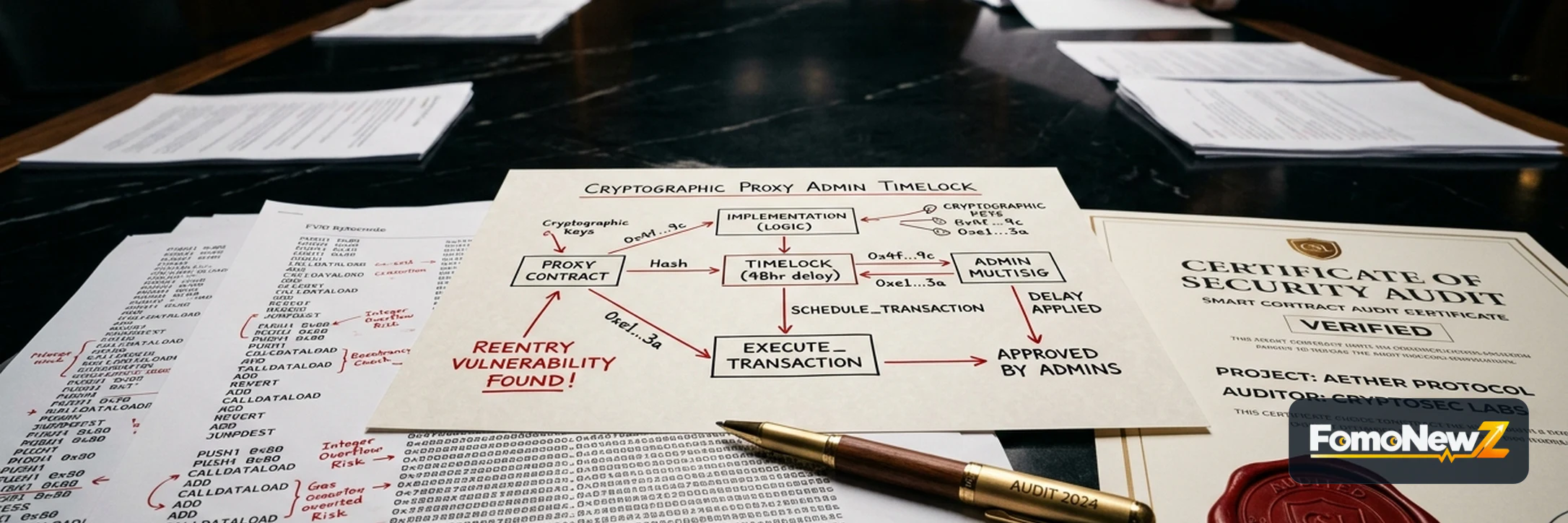
The exponential increase in retail token issuance on public distributed networks has spurred an equally rapid evolution in automated on-chain security tooling. Independent cybersecurity researchers and blockchain intelligence firms are deploying specialized byte-code analyzers and static contract scanners designed to protect market participants from malicious smart contract patterns.
Historically, bad actors utilized complex or obfuscated Solidity and Rust code to deploy 'honeypot' tokens—assets designed to allow open purchase transactions while programmatically blocking subsequent sales through hidden transfer fees, transfer blacklists, or arbitrary owner exemptions.
Modern security platforms have democratized forensic analysis, providing public interfaces that decompile token contracts, simulate buy-and-sell execution pathways in isolated virtual machine sandboxes, and flag exploitative mechanisms before traders connect non-custodial wallets.
Security research teams emphasize that real-time byte-code scanning provides a necessary defense against sophisticated obfuscation strategies used by serial bad actors.
Chapter 02
Verifying Mint Authority and Freeze Permissions
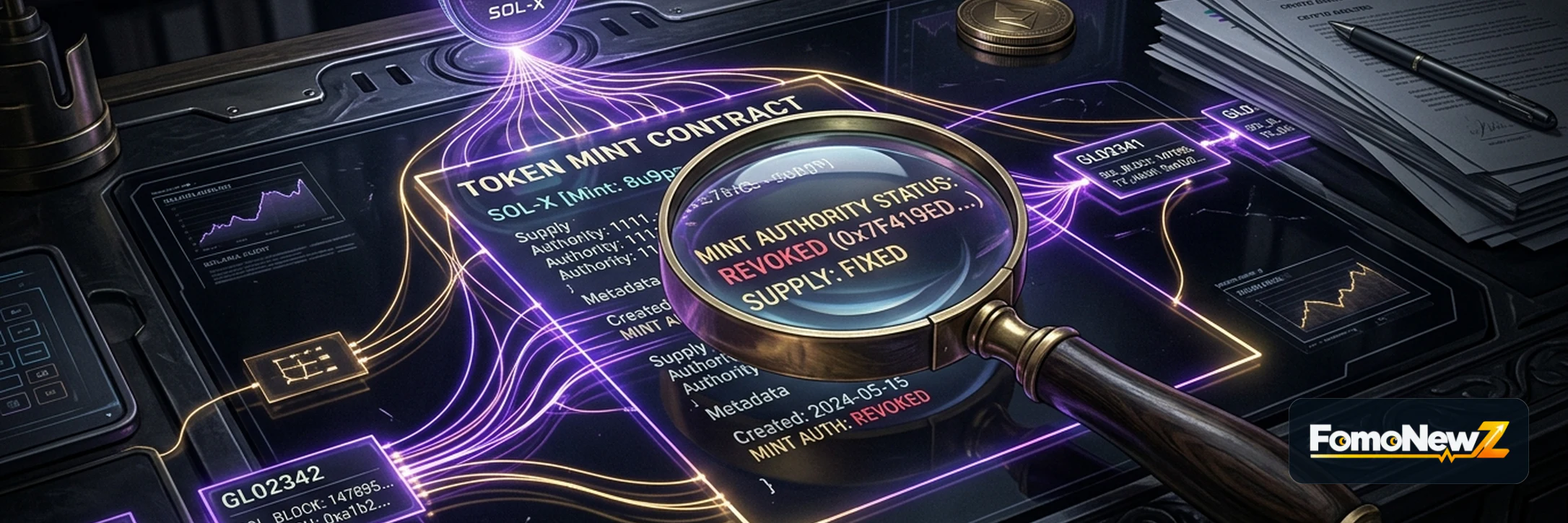
On networks utilizing the SPL Token standard, such as Solana, one of the most critical security verifications is whether the token deployer has permanently revoked the 'Mint Authority' and 'Freeze Authority'. In standard token deployments, the designated mint authority retains the cryptographic capability to issue unlimited additional tokens, which can instantly dilute circulating supply and collapse market valuations.
Similarly, retaining an active freeze authority allows an issuer to black-list specific wallet addresses from transferring tokens, effectively trapping user capital. Automated security scanners now verify whether the authority account has been assigned to the null system address, providing immutable proof that supply parameters cannot be altered post-launch.
Traders are increasingly instructed to verify on-chain metadata immutability, ensuring that contract creators cannot retroactively alter token names, symbols, or image URIs to impersonate unrelated projects.
Decentralized block explorers now prominently display security badges confirming whether mint and freeze permissions have been permanently revoked in verified transaction logs.
Chapter 03
Liquidity Pool Locking and Burn Verification
The single greatest operational hazard in early-stage decentralized liquidity pools is the 'rug pull'—an exploit where the initial liquidity provider removes the underlying pairing asset (such as SOL, ETH, or USDC), leaving token holders with unsellable assets. Verifying the status of Liquidity Provider (LP) tokens has therefore become a mandatory due-diligence step.
Security protocols distinguish between two primary liquidity safeguarding methods: permanent LP token burning and time-locked programmatic custody. In a verified burn transaction, LP tokens are transferred irreversibly to an unrecoverable dead address (such as the zero address), ensuring that liquidity can never be extracted.
In time-locked arrangements, LP tokens are deposited into audited escrow smart contracts that enforce multi-month or multi-year unlock schedules, with smart contract scanners checking vesting terms to alert traders ahead of scheduled liquidity releases.
Smart contract analysts recommend that traders directly inspect transaction receipts on block explorers to confirm that burn events were successfully finalized without conditional callback functions.
Chapter 04
Clustering Analysis and Sybil Insider Tracking
Advanced on-chain intelligence firms have expanded beyond single-contract byte-code inspection into network graph and wallet clustering analysis. Malicious creators frequently attempt to mask heavy insider token concentration by dispersing initial supply across dozens of freshly generated wallets through coordinated multi-send transactions.
Forensic graph algorithms track source-of-funds paths back to common funding addresses or centralized exchange withdrawal batches, accurately calculating the true aggregate ownership controlled by the creator and connected affiliates.
When automated scanners detect that an unidentified insider cluster controls greater than 20 percent of circulating supply, modern trading terminals issue prominent warning badges advising participants of heightened dump risk.
Chapter 05
Building a Resilient Due-Diligence Culture
Security engineers emphasize that while automated analyzers provide invaluable first-line defense against known mechanical exploits, they cannot eliminate fundamental market risk. Token creators frequently invent novel obfuscation methods designed to bypass heuristic pattern matching.
Consequently, cybersecurity organizations urge participants to exercise rigorous operational security, utilizing disposable burner wallets for speculative interactions, setting strict slippage limits, and continuously revoking unused smart contract approvals.
The widespread adoption of transparent, automated auditing tools marks an essential maturation milestone for the digital asset industry, elevating baseline security standards across decentralized trading environments.
As decentralized tools advance, user education and automated protection mechanisms work in concert to safeguard participants from predatory market manipulation.