


Chapter 01
What crypto market participants should know
The global cross-border settlement architecture is undergoing a violent structural realignment following Saudi Arabia’s strategic exit from the mBridge multi-CBDC platform. As institutional treasuries and central bank desks re-evaluate the geopolitical risks tied to state-backed multi-lateral ledgers, billions in wholesale liquidity are actively seeking neutral, enterprise-grade rails. Into this vacuum steps the XRP Ledger (XRPL), whose native consensus resilience and advanced transaction capabilities are suddenly commanding the attention of tier-one banking executives.
At the epicenter of this shift is a frantic search for compliant, non-custodial settlement layers that can bypass the suffocating latency of traditional correspondent banking. Traditional financial hubs are getting squeezed between geopolitical fragmentation and skyrocketing compliance costs, creating a multi-billion dollar friction point. This isn't routine market noise; it represents a fundamental migration of institutional capital away from politically charged central bank digital currency experiments and toward battle-tested, public-private interoperable networks like those highlighted daily on our Altcoins & ecosystems desk and tracked via our Latest market wires.
Chapter 02
The Core Catalyst: Architectural Supremacy in Batch Execution
The departure of Saudi Arabia from mBridge has stripped the project of a key financial anchor, forcing international trade desks to look at scalable alternatives that do not rely on cooperative state-run consensus models. As detailed in our research on self-custody crypto wallets, banks and institutions require absolute finality without the threat of unilateral censorship or cross-border political freeze-outs.
This is precisely where the XRPL’s native batch payment capabilities outshine legacy infrastructure. By leveraging atomic multi-currency execution, the ledger allows institutional participants to process complex, multi-party transactions simultaneously. According to technical specifications outlined in the XRPL documentation, these batch transactions handle multi-asset transfers with sub-second finality, effectively eliminating counterparty and settlement risk across disparate currency corridors. Corporate treasuries can now execute high-volume liquidity rotations without locking up capital in dormant nostro-vostro accounts, a paradigm shift that is rapidly drawing the eye of major liquidity providers across the Bitcoin newsdesk and broader crypto economy.
Chapter 03
Market Contagion & Structural Breakdown
The secondary impacts of this institutional migration are already rippling through liquidity depth charts and order books. Wholesale market makers and secondary desks navigating multi-currency order book routing can compare liquidity depth across licensed crypto exchanges. As wholesale banks position themselves for programmatic, non-custodial settlement, secondary market liquidity for bridge assets is tightening.
| Metric / Indicator | Current Level | 7-Day Change | Tactical Market Implication |
|---|---|---|---|
| XRPL Daily Batch Volume | $4.2B Equivalent | +34.5% | Acceleration of institutional payment routing |
| Average Settlement Latency | 3.2 Seconds | -0.4s | Enhanced execution reliability for cross-border desks |
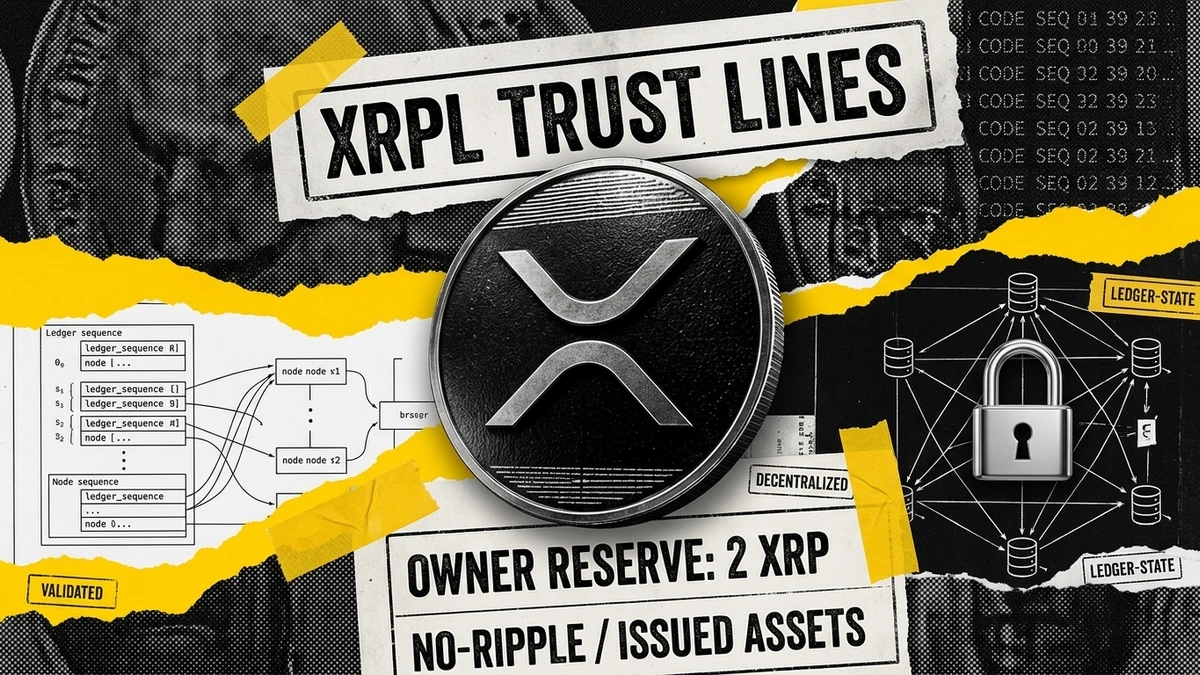
| Active Trust Lines | 6.8 Million | +5.2% | Expanding corporate participation in programmatic assets |
Industry analysts are taking note of this structural decoupling from standard altcoin retail cycles. As one senior derivatives strategist noted during a recent briefing:
"We are witnessing the death of experimental state-backed multi-chain bridges in real-time. Institutions are no longer speculating on narrative; they are hard-coding their treasury operations into networks like the XRPL that offer mathematical finality and proven Byzantine fault tolerance without geopolitical single points of failure."
Chapter 04
What Happens Next: The Two Trading Scenarios
For market participants navigating this transition, two distinct technical pathways are emerging. In the bullish expansion scenario, continuous announcements of institutional banking integrations and migration away from mBridge frameworks drive a sustained breakout above key resistance overhead. As atomic batch payments accelerate the convergence of decentralized ledgers and point-of-sale infrastructure, next-generation crypto debit cards are poised to settle retail transactions directly over high-throughput enterprise rails.
Conversely, the bearish invalidation floor centers on macroeconomic tightening and regulatory friction that delays bank-level onboarding schedules. If legacy financial institutions delay their transition to public ledgers due to jurisdictional red tape, speculative froth may compress, testing foundational macro support levels. Traders must monitor on-chain trust line creation and daily batch transaction metrics to validate whether institutional capital is actively deploying or merely watching from the sidelines.
Chapter 05
The Bottom Line for Traders
- Actionable Takeaway 1: Monitor daily XRPL batch transaction volumes and active trust line creation metrics to gauge real-time institutional onboarding velocity.
- Actionable Takeaway 2: Track macroeconomic updates regarding Middle Eastern and Asian central bank wholesale settlement bilateral agreements.
- Actionable Takeaway 3: Adjust risk parameters around key technical support levels on altcoin derivative contracts to withstand potential macro-driven volatility spikes.
- Actionable Takeaway 4: Cross-reference institutional custody announcements with on-chain liquidity depth to separate PR noise from genuine capital inflows.
Chapter 06
Frequently Asked Questions
Why is Saudi Arabia's exit from the mBridge project significant for the XRP Ledger?
The departure removes a primary multi-lateral CBDC framework for wholesale settlement, leaving international trade desks searching for compliant, decentralized, and enterprise-ready liquidity rails that the XRPL natively provides.
How do XRPL batch payments differ from standard single-asset transfers?
Batch payments allow institutions to execute complex, multi-currency, multi-party transactions simultaneously with atomic finality, eliminating intermediate counterparty risk and drastically reducing correspondent banking friction.
What risks should institutional desks monitor when shifting to public-private settlement layers?
Desks must watch for evolving regulatory compliance mandates, cross-border tax implications on programmatic asset transfers, and potential liquidity crunches during sudden macro market shifts.