

Chapter 01
Begin with the document, not the rumor
The phrase “XRP ETF approved” can hide several different events. A sponsor may file or amend a registration statement. An exchange may submit or certify a listing. A prospectus may become effective. The fund may then begin trading. Each event has a document, date and legal consequence of its own.
The SEC's EDGAR record is the best starting point. Search the registrant and read the latest filing alongside earlier amendments. A filing appearing on EDGAR proves that the document was submitted; it does not, by itself, mean a product is trading or that the regulator endorses XRP.
Chapter 02
Registration and listing answer different questions
A registration statement describes the security offered to investors: the sponsor, custody arrangement, creation and redemption process, expenses, valuation method, tax discussion and material risks. Amendments often resolve comments or update commercial terms, but an amendment number is not a quality score.
The exchange side addresses where and under which rule the shares can trade. A certification or rule filing belongs to that market process. Researchers should match the legal name, ticker, exchange and registrant across documents; similarly named trusts and funds can have different structures.
The REX-Osprey XRP ETF prospectus, for example, identifies the product and exchange while carrying the standard warning that neither the SEC nor the CFTC has approved or disapproved the securities or passed on the disclosure's accuracy. That disclaimer is important. Regulatory effectiveness is not a recommendation.
Chapter 03
Read custody and exposure before comparing fees
Two products using XRP in their names may obtain exposure differently. One may hold XRP directly with a named custodian. Another may use a subsidiary, derivatives or other instruments. The prospectus should explain what the fund owns, how net asset value is calculated and which event could prevent normal creation or redemption.
Custody deserves a full pass. Identify the custodian, key-storage description, insurance limitations and allocation of loss. Check whether the sponsor can change service providers. Then read how authorized participants create and redeem shares and whether the process uses cash, XRP or a combination.
Only after understanding the structure should an investor compare the sponsor fee and trading costs. A low headline expense ratio cannot offset a persistent market-price premium, wide bid-ask spread or a structure that does not match the desired exposure.
Chapter 04
A five-field tracker that resists hype
Maintain one row per product with five dated fields: latest registration filing, exchange and ticker, effective status, first trading date, and current prospectus fee. Add custody and exposure notes in a separate column. Link every cell to the primary document.
When an issuer announces a launch, confirm that the exchange shows actual trading and that the prospectus available to investors matches the announcement. When a filing changes, record what changed rather than simply replacing the old link. This preserves the path from proposal to live product.
Chapter 05
What an XRP fund does—and does not—solve
An exchange-traded product can place XRP exposure inside a conventional brokerage workflow and shift wallet operations to professional service providers. It does not remove price volatility, custody concentration, tracking error, market-hours mismatch or legal uncertainty. Shareholders generally own shares of the fund, not a personal XRP balance they can withdraw to a wallet.
The cleanest reporting language is precise: name the filing, issuer, exchange, ticker and date. Say whether the product is proposed, effective or trading. Link the source. Avoid “approved” unless the cited regulatory action supports that exact description. In a market where one verb can move expectations, document literacy is part of risk control.
Chapter 06
Regulatory qualification pathways under the Securities Act of 1933
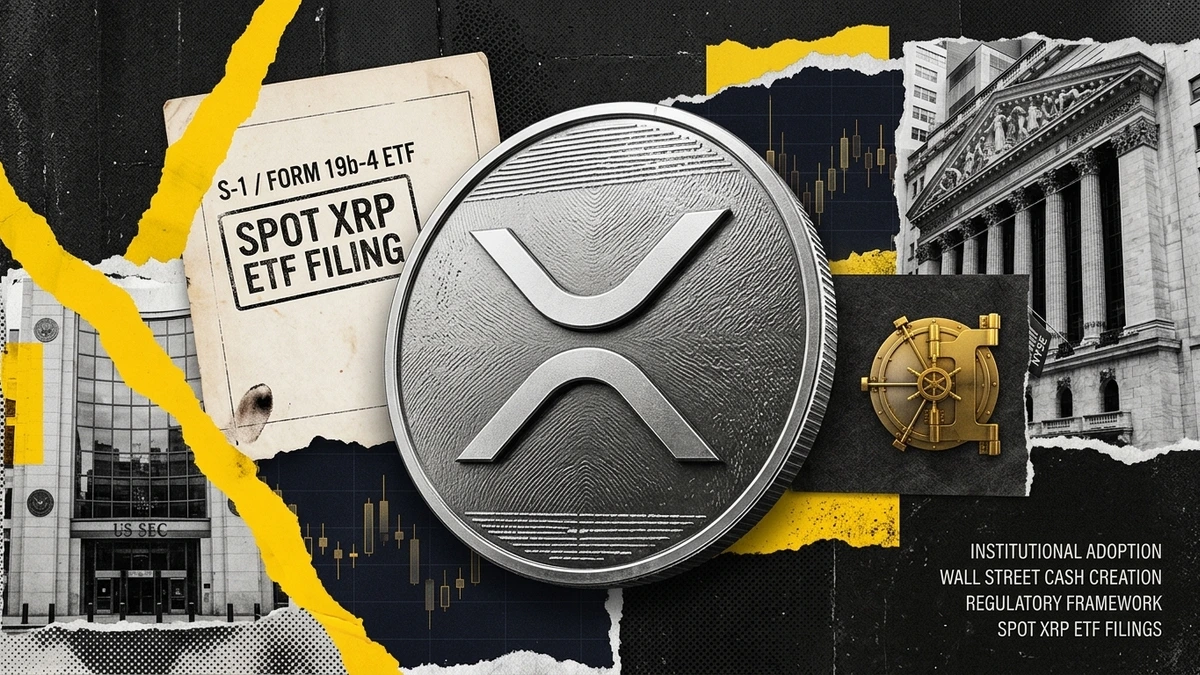
The legal and structural framework for spot XRP exchange-traded funds in the United States requires navigating complex dual regulatory filings with the Securities and Exchange Commission (SEC):
- Form S-1 Registration Statement: Filed by the prospective fund sponsor under the Securities Act of 1933, detailing the trust's commercial structure, custodial arrangements, creation-redemption mechanics, management fee schedules, and comprehensive risk factor disclosures.
- Form 19b-4 Proposed Rule Change: Submitted by the listing national securities exchange (such as Nasdaq, NYSE Arca, or Cboe BZX) under Section 19(b) of the Securities Exchange Act of 1934, requesting regulatory authorization to list and trade shares of the commodity-based trust.
Statutory review milestones under Section 19(b) follow a structured timeline: 1. Initial publication of proposed rule change in the Federal Register initiates a 45-day review window. 2. The Commission can issue extension notices up to Day 90 and Day 180 to evaluate public comments. 3. The Commission must issue a final approval or disapproval order within exactly 240 calendar days from the initial Federal Register publication date.
Sponsors must demonstrate compliance with Section 6(b)(5) of the Exchange Act, which mandates that exchange rules be designed to prevent fraudulent and manipulative acts and practices, protect investors, and foster public interest.
Chapter 07
Market structure prerequisites: CME futures volume and liquidity depth
A critical statutory benchmark historically applied by the SEC during the evaluation of spot cryptocurrency ETPs is the existence of a regulated market of significant size in the underlying asset. Following precedents established in spot Bitcoin and Ethereum approvals, the SEC assesses whether the primary listing exchange has entered into a comprehensive surveillance-sharing agreement with a regulated futures market (such as the Chicago Mercantile Exchange, CME).
Key analytical factors evaluated during regulatory reviews include:
1. Futures-to-Spot Price Correlation: Econometric analysis verifying that prices on regulated futures venues exhibit high statistical correlation with global spot exchange price indices across 1-minute, 5-minute, and hourly intervals. 2. Order Book Liquidity and Market Dispersion: Ensuring that global trading volume is not concentrated on unregulated offshore exchanges vulnerable to wash trading, but is widely distributed across audited, regulated custodial counterparties. 3. Custodial Segregation and Bankruptcy Remoteness: Confirming that underlying spot XRP holdings are held by qualified custodians chartered under state or federal trust laws, subject to strict cold-storage reserve audits and independent third-party SOC verification reports. 4. Creation-Redemption Architecture: Ensuring Authorized Participants can source physical liquidity efficiently without causing market-wide price dislocations during volatile trading sessions.