


Chapter 01
Begin with the threat model
A wallet secures keys, not coins stored inside a device. The blockchain records assets and permissions; the wallet helps a user create and protect the cryptographic signatures that move them. This distinction explains why buying a hardware device is not the end of a security plan.
Start by naming the risks that matter to you. A phone user holding a modest amount faces different trade-offs from a business treasury, a frequent trader or a long-term holder planning inheritance. Common threats include phishing, malicious software, physical loss, coercion, accidental destruction and an heir being unable to recover assets.
The right setup balances those risks. Adding steps can reduce one danger while making recovery so complicated that the owner becomes the biggest point of failure.
Chapter 02
Treat the recovery secret as the master key
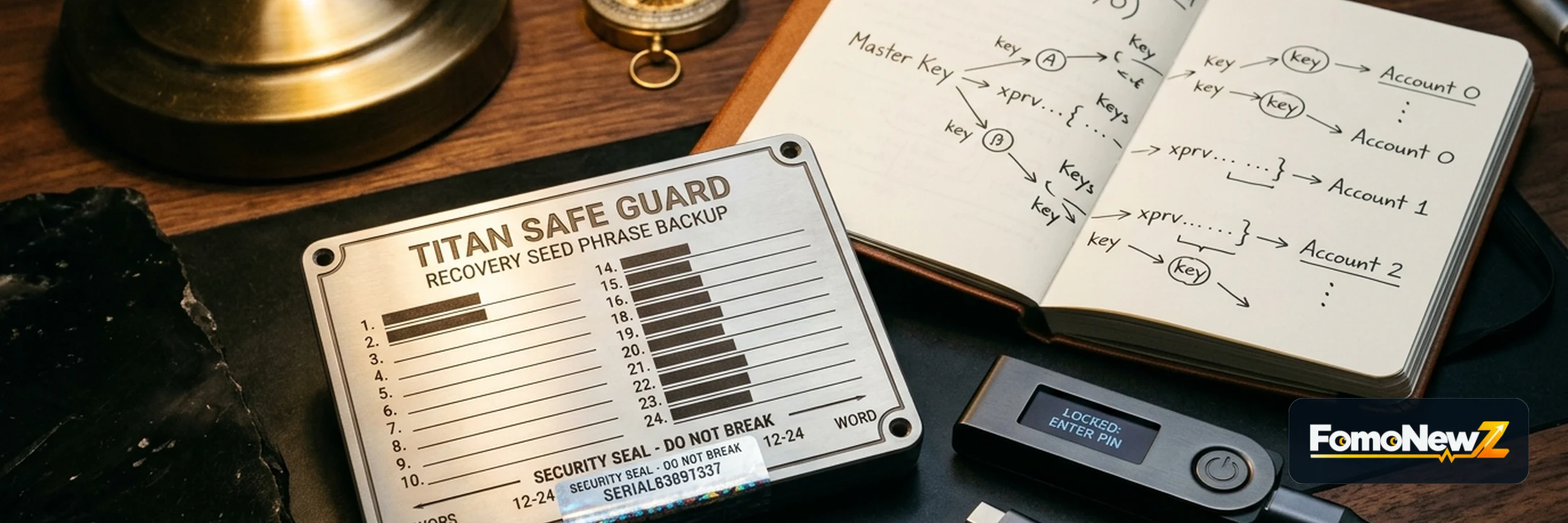
A recovery phrase or comparable wallet backup can recreate control of all accounts derived from it. Anyone who obtains it may be able to move the assets without the device, password or biometric check. Never type it into an ordinary website, share it with support staff or photograph it for cloud storage.
Generate the phrase using the wallet's documented setup process. If a device arrives with words already printed or supplied, stop: a legitimate new-device setup should create the secret for the owner. Record it offline in a durable form and check every word and its order before funding the wallet.
Storage should account for fire, water, theft and accidental disclosure. Two copies in genuinely separate secure locations can improve disaster recovery, but each copy also creates another opportunity for compromise. Avoid clever homemade encryption that you may not be able to reconstruct years later.
Chapter 03
Verify on the trusted display
Hardware wallets are valuable because signing keys can remain isolated from an internet-connected computer. Their small screen is also a security boundary. Malware can replace a destination address on a laptop or phone, so compare the full address and amount on the hardware device before approving.
For a new destination, send a small test transaction first when fees and the use case make that practical. Confirm that it arrived, then independently re-check the address for the larger transfer. Address poisoning and look-alike strings exploit the habit of checking only the first and last few characters.
Smart-contract approvals deserve the same care. A transaction described as 'connect wallet' can request permission to move tokens. Read the wallet's simulation or permission summary, verify the domain and limit allowances when the application supports it. Periodically review and revoke approvals you no longer need.
Chapter 04
Defend the software supply chain
Download wallet software from a verified official source and confirm the publisher. Search advertisements and direct messages frequently lead to cloned pages. Bookmark the correct domain after independent verification rather than searching for it every time.
Keep the operating system, browser, wallet application and device firmware maintained. Read release notes for major changes, and never install an urgent update offered through an unsolicited message. Vendor support will not need your recovery phrase to diagnose a device.
Browser wallets used for daily activity should not automatically control long-term holdings. Separating a spending wallet from a vault reduces the value exposed to experimental applications. Businesses should consider multi-person approval so that one compromised device or employee cannot move everything.
Chapter 05
Rehearse recovery before an emergency
A backup that has never been tested is a theory. Follow the wallet vendor's safe verification or recovery-check process while the balance is still small. Do not enter the phrase into an unknown application just to test it. Confirm that the process derives the expected accounts and that any optional passphrase is documented correctly.
Optional passphrases can protect a stolen seed backup, but they introduce a separate secret that cannot be reset. A forgotten or slightly mistyped passphrase can lead to a valid but empty wallet, with no company able to restore the intended account. Use that feature only if you can manage the added recovery burden.
Review the plan after moving, changing devices or changing who should inherit. An heir needs enough information to locate the process, understand the asset types and avoid scams, without receiving unrestricted access too early. Legal advice may be necessary where estates, businesses or multiple jurisdictions are involved.
Chapter 06
A calm incident plan
If you suspect compromise, do not respond through the same message or website that created the concern. Use a known-clean device, obtain the official wallet software independently and prepare a new wallet with a new recovery secret. Move assets carefully, starting with the most exposed accounts and accounting for tokens that require network fees.
Preserve transaction IDs, domains, messages and timestamps for reporting. Contact the relevant exchange immediately if funds were sent there, but understand that blockchain transactions are generally not reversible by a wallet manufacturer.
The strongest wallet system is boring under pressure: verified software, an offline recovery path, careful transaction review, limited everyday exposure and a recovery rehearsal. Product features matter, but consistent habits determine whether those features protect the owner when something goes wrong.
Chapter 07
Hardware security modules (HSM) and secure element architecture
Hardware cryptocurrency wallets rely on dedicated physical microchips called Secure Elements (commonly certified to EAL5+ or EAL6+ Common Criteria standards) to store private keys in hardware environments mathematically isolated from general-purpose computer operating systems. Unlike software wallets operating in memory environments vulnerable to clipboard hijackers, keyloggers, and remote access trojans, a Secure Element performs cryptographic signing internally and only exports the completed digital signature across the communication interface.
Threat model evaluation across wallet categories: - Memory Scraping: High risk for software wallets; physically impossible on Secure Element hardware. - Malicious Browser Extensions: Critical risk for hot wallets; mitigated on hardware wallets by mandatory physical screen confirmation. - Clipboard Hijacking: High risk for desktop wallets; mitigated on hardware devices via independent visual address verification. - Physical Chip Extraction: Moderate risk for consumer microcontrollers; strongly mitigated by tamper-resistant silicon in certified Secure Elements.
Modern hardware architectures employ microcontrollers running specialized, audited firmware alongside the Secure Element. High-assurance models utilize physical button confirmation screens directly wired to the security chip, ensuring that transaction recipient addresses and satoshi fee amounts cannot be modified by compromised host computer software during transaction construction.
Chapter 08
Operational isolation: air-gapped signing and burn-wallet practices
High-net-worth investors and institutional treasury managers implement defense-in-depth isolation strategies to prevent single-point security failures:
1. Air-Gapped Signing Protocols: Utilizing hardware signing devices that interact with host computers exclusively via QR code optical scanning or physical microSD data cards, completely eliminating direct USB, Bluetooth, or NFC wired connections. 2. Burn-Wallet Architecture: Never interact with newly deployed decentralized applications, NFT mint contracts, or experimental protocols using vault wallets containing primary holdings. Operators maintain lightweight "burner" wallets funded only with the exact capital required for the specific transaction, isolating systemic risk. 3. Transaction Simulation: Deploying local transaction simulation software (such as open-source transaction decoders) prior to executing contract signatures to inspect prospective state changes, token transfers, and approval alterations before committing transactions to the network. Segregating long-term cold storage from daily DeFi operations remains the single most effective defense against wallet drainage.