

Chapter 01
The Appellate Landscape Before the Second Circuit
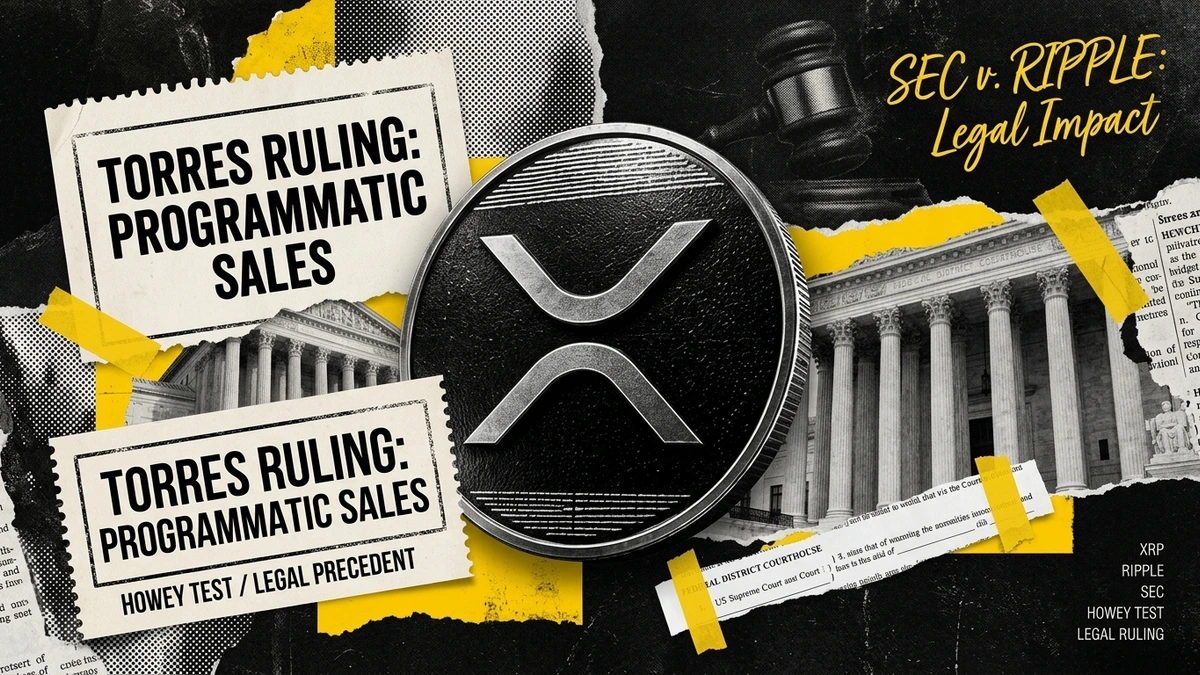
The legal battle between the United States Securities and Exchange Commission and Ripple Labs entered a critical phase as both parties submitted comprehensive principal briefs to the United States Court of Appeals for the Second Circuit. The central issue before the three-judge appellate panel focuses on the statutory boundaries of Section 5 of the Securities Act of 1933 in relation to programmatic sales of digital tokens on public, blind-bid order books.
In July 2023, District Judge Analisa Torres rendered a divided summary judgment ruling that shaped market expectations across the entire digital asset ecosystem. The district court determined that institutional sales totaling $728 million made directly to sophisticated hedge funds and institutional buyers constituted unregistered investment contract offerings under the framework set forth in SEC v. W.J. Howey Co. Conversely, the court found that programmatic sales executed through algorithmic order matching on digital currency exchanges did not meet the third prong of the Howey test because retail counterparties could not reasonably connect their capital investment to the promotional efforts of Ripple's management team.
The SEC's appellate appeal challenges this distinction, arguing that the economic reality of the token ecosystem created an identical expectation of profit regardless of whether purchasers acquired XRP directly from the issuer or through intermediate secondary markets. Ripple's cross-appeal contends that the district court applied an overly rigid interpretation to the institutional sales contracts, asserting that neither post-sale contractual covenants nor distribution rights were attached to the physical tokens.
Chapter 02
Statutory Scrutiny of the Howey Investment Contract Doctrine
At the core of the appellate review is the historical interpretation of investment contracts established by the Supreme Court in 1946. Securities law scholars and financial market participants are closely following the oral argument filings because the Second Circuit's ruling will serve as binding precedent for the Southern District of New York, the primary federal forum for major digital asset enforcement actions.
Ripple's legal defense team highlighted that throughout seventy years of federal jurisprudence following Howey, every single court decision upholding an investment contract finding involved an underlying legal right to the promoter's enterprise profits, assets, or ongoing managerial obligations. Because secondary market buyers of XRP receive nothing more than a cryptographic bearer asset that operates autonomously on the open-source XRP Ledger, Ripple maintains that classifying secondary spot transactions as securities transactions contradicts foundational federal statutes.
Conversely, the regulatory commission claims that Ripple's extensive promotional campaigns, public statements regarding escrow holdings, and business development initiatives in cross-border payments cultivated a unified investor community that anticipated asset appreciation solely from managerial development.
Chapter 03
Injunction Parameters and Civil Monetary Penalties
Beyond the core securities registration dispute, the appellate briefs address the final monetary judgment and permanent injunction imposed by the district court in August 2024. Judge Torres ordered Ripple to pay a civil monetary penalty of $125.03 million, an amount significantly lower than the SEC's initial request for approximately $2 billion in disgorgement and civil fines.
The district court's final order also included a negative injunction requiring Ripple to comply with registration provisions for future institutional token offerings. Ripple's brief asks the appellate court to clarify the precise scope of this injunction, ensuring that institutional On-Demand Liquidity (ODL) sales to non-US licensed financial institutions and commercial enterprise software clients remain fully operational without recurring regulatory friction.
Attorneys representing cross-border remittance providers submitted amicus curiae briefs explaining that instant settlement rails require predictable, programmatic access to bridge liquidity without delays imposed by traditional private placement exemptions.
Chapter 04
Secondary Market Ramifications for U.S. Exchanges and Custodians
The ultimate resolution of the Second Circuit appeal carries structural implications for regulated crypto spot trading venues in the United States. Following the district court's 2023 summary judgment, major domestic exchanges including Coinbase, Kraken, and Gemini relisted XRP for spot spot trading, citing the federal ruling as judicial confirmation of non-security status on secondary trading desks.
Should the Second Circuit affirm Judge Torres' programmatic sales determination, it would cement a formidable legal defense for other layer-1 protocols facing similar enforcement actions from regulatory agencies. Conversely, an adverse appellate modification or remand could revive secondary liability questions for domestic trading platforms and non-bank custody providers.
Market observers note that trading volumes and on-chain liquidity depth on secondary XRP pairs have demonstrated remarkable resilience throughout the four-year litigation, reflecting institutional and retail demand that operates independently of regulatory filings.
Chapter 05
Procedural Calendar and Expected Judicial Milestones
The Second Circuit has established an expedited briefing calendar, with responsive answer briefs and reply filings scheduled through late autumn. Legal analysts predict that oral arguments before the appellate panel will be convened in early 2027, with a comprehensive written opinion expected several months thereafter.
Regardless of the intermediate outcome, legal scholars widely anticipate that the losing party will petition the Supreme Court of the United States for a writ of certiorari, setting up a definitive national resolution on how the century-old Securities Act applies to decentralized digital assets.
Until a final appellate mandate is issued, Judge Torres' summary judgment remains active law, providing continued operational certainty for retail market participants and enterprise builders utilizing the XRP Ledger worldwide.