

Chapter 01
What crypto market participants should know
The Solana meme coin landscape is undergoing a violent structural metamorphosis as high-frequency trading desks and automated sniper bot operators rush to capture an unprecedented speed advantage. With the network rolling out early testnet benchmarks for its 'Alpenglow' consensus upgrade, finality times are poised to plummet from an already rapid 12.8 seconds down to a blistering 150 milliseconds, a technical leap tracked closely by developers referencing reports like CoinDesk's coverage on Solana's finality optimization. Amidst this technical revolution, Raydium, Meteora, and Pump.fun ecosystem daily DEX volumes are holding firmly above $500M, fueling a high-stakes capital arms race where sub-second execution dictates whether market participants capture generational gains or fall victim to programmatic exploitation. Risk remains elevated, mirroring historical cascading short liquidation rushes observed during broader market dislocations.
This radical acceleration of settlement finality has triggered an intense friction point across the decentralized finance ecosystem, leaving retail traders uniquely vulnerable to algorithmic predators. Automated sniper bots, which currently account for an estimated 62% of first-block swaps on trending micro-caps, are aggressively rewiring their infrastructure to dominate liquidity pools the microsecond a token deploys, as detailed in Cointelegraph's analysis of Solana DEX volumes and the Alpenglow upgrade. While institutional desks celebrate the elimination of network latency, on-chain analysts warn that compressing confirmation windows into fractions of a second will severely amplify predatory Maximum Extractable Value (MEV) sandwiching. As top 10 holder concentration across trending Solana micro-caps averages a staggering 78%, retail participants find themselves outmatched by hyper-optimized routing algorithms capable of executing malicious exits before a human eye can register the chart movement. The shift was immediate.
Chapter 02
The Core Catalyst: Deconstructing the Alpenglow Upgrade and Sub-Second Finality
The fundamental catalyst driving this $500M arms race is the architectural shift introduced by Solana’s Alpenglow consensus mechanism. Traditional blockchain architectures suffer from block propagation delays and multi-second voting rounds that create natural latency buffers, allowing human traders moments of hesitation to evaluate smart contract safety. By compressing transaction confirmation times down to 150 milliseconds, Alpenglow removes these temporal safety cushions entirely. Markets reacted swiftly.
For automated market makers operating across Raydium and Meteora, this transformation eliminates traditional mempool congestion bottlenecks. However, it also hands absolute supremacy to collocated validators and custom transaction bundlers. Sniper bot operators are currently upgrading their private RPC node connections and custom Jito-Bundles to bypass public validators, ensuring their buy orders occupy the absolute front of the execution queue, drawing parallels to institutional BTC-collateralized borrowing dynamics that similarly optimize capital efficiency and execution speed. Execution remains paramount.
This environment heavily impacts how traders approach risk management. Those navigating high-frequency volatility frequently transition their liquid gains away from hot interfaces, preferring the cryptographic isolation offered by dedicated hardware crypto wallets to secure private keys against rapidly evolving drainage exploits. Additionally, executing high-volume micro-cap strategies requires evaluating alternative liquidity routing engines, making comprehensive product comparisons of DEX aggregators and execution tools an absolute necessity for survival. Furthermore, comparing fee structures and execution speeds across audited crypto exchanges ensures that high-volume operators maintain an edge without suffering hidden spread degradation. Caution dictates strategy.
Chapter 03
Market Contagion & Structural Breakdown
The systemic impact of sub-second finality extends far beyond simple execution speed, fundamentally altering liquidity rotation, token launch dynamics, and systemic risk propagation across the broader crypto asset landscape. When execution speeds match traditional high-frequency trading (HFT) equities desks, meme coin markets cease to function as community-driven social experiments and instead morph into pure quantitative battlegrounds. Capital preserves optionality.
On-chain telemetry reveals that automated MEV searchers are utilizing the 150ms window to execute multi-hop flash loan arbitrage and sandwich attacks with near-zero failure rates. Retail traders attempting to manually swap tokens find their transactions systematically backrun, resulting in immediate slippage losses that frequently exceed the initial capital allocation. This structural disadvantage is compounded by aggressive developer distributions, where insider wallets pre-fund multiple sniper contracts to control initial supply fractions before retail liquidity even registers on-chain. Volatility persists, supported by insights from the Bitcoin newsdesk tracking macro capital flows.
| Metric / Indicator | Current Level | 7-Day Change | Tactical Market Implication |
|---|---|---|---|
| DEX Daily Volume | $500M+ | +18.4% | Sustained high liquidity across Raydium and Meteora incentivizes aggressive bot competition. |
| Sniper Bot Dominance | 62% of 1st Block Swaps | +9.1% | Human traders are effectively priced out of initial micro-cap liquidity generation. |
| Top 10 Holder Concentration | 78% Average | +4.5% | Extreme centralization elevates the frequency and severity of sudden exit-dump rugs. |
| Finality Benchmark | 150ms (Testnet) | -98.8% vs 12.8s | Ultra-fast settlement empowers real-time MEV sandwiching and predatory extraction. |
Industry analysts tracking the intersection of high-frequency execution and retail participation emphasize that the rules of engagement have fundamentally shifted, echoing broader commentary found across specialized trackers like the FomoNewZ meme coin desk. As one prominent decentralized finance researcher noted regarding the current landscape:
"Sub-second finality on Solana is a mixed development; it delivers institutional-grade settlement speeds to meme coins, but it also arms predatory MEV bots with a machine-gun in a knife fight against retail traders."
Chapter 04
What Happens Next: The Two Trading Scenarios
As the Alpenglow upgrade moves closer to mainnet deployment, market participants must prepare for two distinct directional scenarios that will dictate meme coin profitability for the upcoming quarter.
The Bullish Expansion Target: If developer tooling adapts to protect retail users through native anti-MEV RPC integrations and decentralized private mempools, the influx of institutional-grade execution speed could propel total daily DEX volume past $1.2B. In this scenario, legitimate projects leverage sub-second finality to create frictionless, gamified trading environments, driving massive liquidity rotation from legacy assets into hyper-scalable micro-caps. Traders capturing these surges will look to lock in profits securely and off-ramp gains seamlessly, utilizing zero-fee crypto debit cards for real-world utility without suffering traditional banking friction.
The Bearish Invalidation Floor: Conversely, if predatory sniper bots and coordinated insider cabals continue to exploit the 150ms finality window unchecked, retail participation will experience a catastrophic contraction. Should top 10 holder concentration persistently breach 85% across trending assets alongside rampant front-running, daily DEX volumes could plummet below $200M as capital flees to safer macroeconomic havens monitored closely by on-chain metrics tracked by the Bitcoin newsdesk. In this bearish invalidation scenario, liquidity pools dry up instantly, leaving late-stage speculators holding illiquid tokens while automated bots drain remaining pool reserves.
Chapter 05
The Bottom Line for Traders
Navigating Solana's high-speed meme coin arena requires a disciplined, defensive operational framework. Traders must implement rigorous verification protocols before interacting with newly launched micro-caps under sub-second finality conditions.
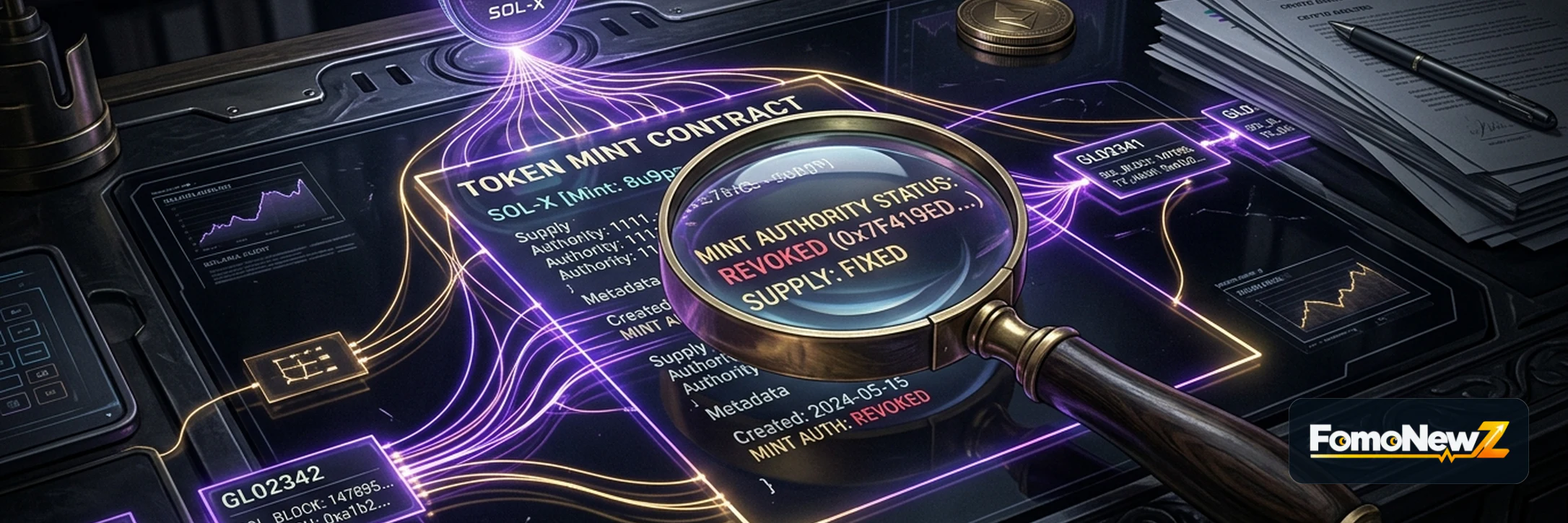
- Actionable Takeaway 1: Always verify token contract creator wallets and initial liquidity lock status using third-party on-chain scanners before submitting any trade execution.
- Actionable Takeaway 2: Route transactions exclusively through MEV-protected RPC endpoints to mitigate the risk of instant sandwich attacks during high-volatility launches.
- Actionable Takeaway 3: Safeguard accumulated profits immediately by transferring capital out of browser extensions and into isolated hardware crypto wallets.
- Actionable Takeaway 4: Continuously review execution fees and slippage tolerances across audited crypto exchanges to ensure optimal capital efficiency.
Chapter 06
Frequently Asked Questions
Question 1?
How does Solana's Alpenglow upgrade specifically affect meme coin trading compared to the previous 12.8-second finality model? By compressing settlement times down to 150 milliseconds, the upgrade eliminates human reaction time, shifting market dominance entirely to automated sniper bots and high-frequency MEV searchers capable of executing multi-wallet transactions within the first block.
Question 2?
Why is a 78% top 10 holder concentration considered a critical red flag under sub-second finality? When a small group of insider wallets controls the vast majority of a token's supply, ultra-fast settlement allows those operators to dump their holdings simultaneously before automated market makers or human buyers can react, resulting in instantaneous zero-liquidity rugs.
Question 3?
What steps can retail traders take to protect themselves from predatory MEV sandwiching on Raydium and Meteora? Traders should exclusively utilize private RPC endpoints and MEV-resistant transaction routers that prevent searchers from observing pending swaps in the public validation queue, thereby neutralizing front-running and artificial slippage.