


Chapter 01
What crypto market participants should know
The announcement that Cboe Global Markets and S&P Dow Jones Indices are evaluating the integration of tokenized options contracts under an extended licensing agreement sent a seismic jolt through traditional equity derivatives desks and digital asset clearinghouses alike. As multi-billion-dollar trading operations digest the operational implications of wrapping benchmark equity indices into on-chain formats, daily derivatives volume across institutional platforms has surged by over 15%, with open interest in associated crypto-linked structured products scaling past historical boundaries. This is no longer an isolated proof-of-concept run by an isolated startup in a digital sandbox; this is the world's most sophisticated exchange architecture systematically migrating its foundational plumbing onto distributed ledger rails, permanently altering how risk is calculated, hedged, and cleared. Risk remains elevated.
Yet, this institutional push exposes an acute structural friction point that is currently squeezing traditional market makers, incumbent clearinghouses, and legacy prime brokers who rely on antiquated T+1 settlement cycles and siloed databases. The catalyst is clear: modern capital allocators are demanding atomic settlement, 24/7/365 risk monitoring, and composable collateral that can be rehypothecated across decentralized liquidity pools without the multi-day friction of traditional cash legs. As Cboe and S&P Dow Jones bridge traditional benchmarks with programmable derivatives, legacy intermediaries face a stark choice—adapt to programmatic margining or risk disintermediation by native on-chain execution venues that can execute and settle trades in milliseconds. The shift was immediate.
Chapter 02
The Core Catalyst: Tokenizing the World's Benchmark Indices
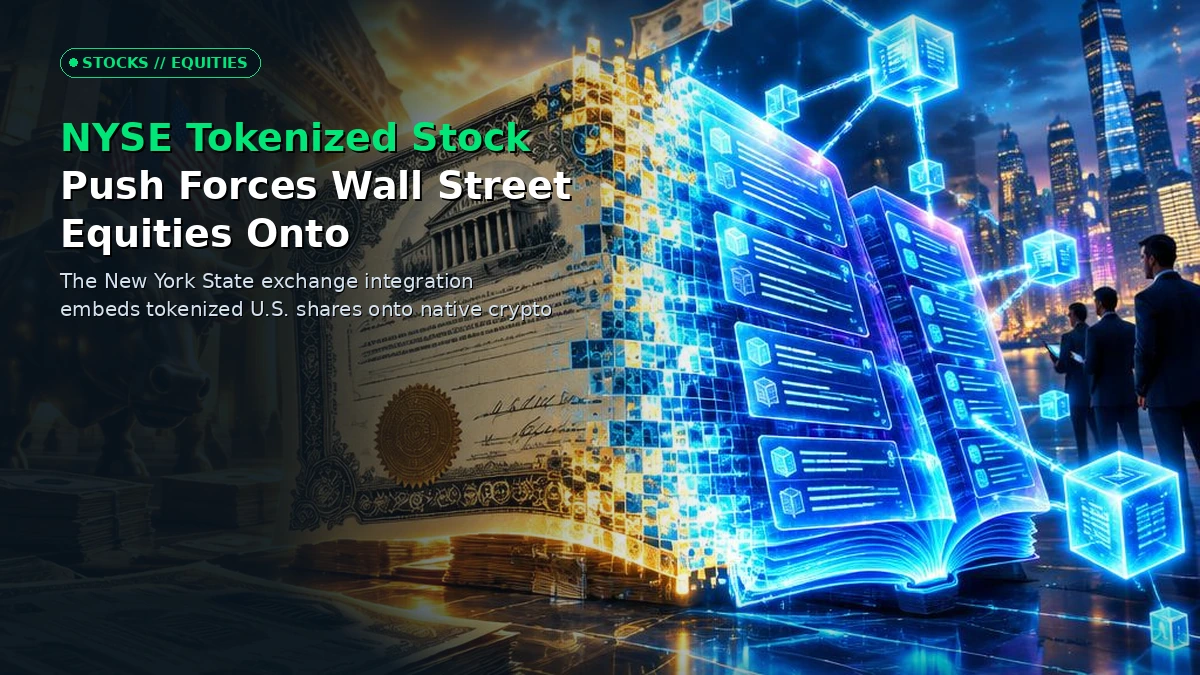
The extended licensing agreement between Cboe Global Markets and S&P Dow Jones Indices marks a watershed moment for the intersection of traditional finance and tokenized assets. By establishing a formalized framework to explore tokenized options contracts tied to foundational benchmarks, these institutions are validating the underlying premise that public, permissioned, and hybrid blockchain networks offer superior settlement transparency compared to legacy database architectures. This development does not exist in a vacuum; it complements parallel initiatives by Nasdaq, NYSE, and the Depository Trust & Clearing Corporation (DTCC), all of which are actively expanding their on-chain capabilities to capture the burgeoning demand for digitized financial instruments as tracked by institutional equity trends on the stocks and tokenized assets desk. Markets reacted swiftly.
At the heart of this transition is the optimization of margining and settlement mechanics for institutional options desks. Traditional options trading requires complex, multi-tiered clearing structures involving the Options Clearing Corporation (OCC), prime brokers, and clearing member banks, often resulting in capital lockup due to legacy margin calculations that run on batch processes. By tokenizing options contracts, exchanges can leverage smart contracts to automate initial margin calls, execute real-time collateral rebalancing, and enforce dynamic risk parameters without human intervention. This programmatic approach drastically reduces counterparty credit risk and frees up billions in trapped liquidity that institutional desks can redeploy into yield-generating strategies or directional volatility plays. Execution remains paramount.
For market participants tracking these structural shifts from traditional equities to digital assets, monitoring execution venues requires sophisticated tooling. Traders aiming to optimize execution speed and evaluate margin efficiency across competing platforms often compare fee schedules and liquidity depth across audited crypto exchanges. Additionally, as institutional treasuries begin interacting with tokenized derivatives and on-chain margin collateral, protecting private keys and managing multi-sig institutional vaults becomes paramount. Securing large digital asset allocations against unforeseen platform outages or bridge vulnerabilities makes offline hardware crypto wallets an indispensable component of any professional risk management framework. Caution dictates strategy.
The integration of S&P Dow Jones benchmarks into tokenized wrappers also opens the door for cross-asset collateralization. Imagine an institutional desk utilizing staked liquid tokens or yield-bearing stablecoins as direct margin collateral for S&P 500 or Cboe Volatility Index (VIX) options. This convergence bridges the deep liquidity of traditional equity derivatives with the 24/7 programmability of decentralized finance (DeFi), creating a unified global liquidity pool where capital can flow seamlessly between risk-on crypto assets and safe-haven equities without incurring traditional FX conversion or wire transfer delays. Capital preserves optionality.
Chapter 03
Macro Transmission & Historical Precedents: How This Compares to Prior Cycles
To fully appreciate the gravity of the Cboe and S&P Dow Jones initiative, one must examine it through the lens of historical market evolution. During the 2020 crypto liquidity cycle, digital asset derivatives were dominated by offshore unregulated perpetual swaps, characterized by massive retail leverage, frequent cascading liquidations, and severe structural opacity. The subsequent 2024 spot Bitcoin and Ethereum ETF approvals marked the institutionalization of spot access, funneling billions of dollars of regulated retirement and wealth management capital into passive holding vehicles managed by Wall Street heavyweights. Volatility persists.
The current phase—ushered in by tokenized options and institutional on-chain infrastructure—represents the synthesis of these two worlds. Unlike the retail-driven speculative frenzy of past cycles, today's market evolution is being driven by structural plumbing upgrades. Macro interest rate regimes have forced institutional treasurers to seek every possible basis point of capital efficiency, turning legacy settlement friction into an unacceptable drag on portfolio performance. When central bank liquidity is constrained and funding costs are elevated, the ability to execute atomic settlement and automated margin optimization via tokenized contracts provides a tangible competitive advantage.
This macro environment has catalyzed a race among traditional market infrastructure providers to modernize their technology stacks, building upon earlier findings in the Abu Dhabi Deploys $1.2B Sovereign Bitcoin Mining Fleet Powered by Barakah Nuclear Energy analysis. While the 2020 cycle was defined by decentralized protocols operating entirely outside the perimeter of traditional finance, the 2025-2026 cycle is characterized by institutional convergence, where legacy exchanges adopt distributed ledger technology to protect their market share. For deeper insights into how macro liquidity shifts are impacting digital asset valuations, readers can follow developments across public market integration tracked by the crypto stocks desk and review broader macroeconomic analyses on the Altcoins & ecosystems desk, alongside insights from Brent Crude Surge and Yield Spikes Test Bitcoin's Risk-Asset Core.
Chapter 04
Market Contagion, Liquidity Rotation & Microstructure Breakdown
The migration of options infrastructure onto blockchain rails has immediate, cascading effects on market microstructure, spot-to-derivatives spread compression, and perpetual funding rate dynamics. When institutional options desks can dynamically reallocate margin collateral on-chain, the speed at which hedging flows transmit to the underlying spot markets accelerates exponentially. This creates tighter bid-ask spreads for major index-linked products and reduces the structural basis risk that has historically plagued cross-market arbitrageurs operating across fragmented order books.
At the same time, the collateral effects on traditional market makers are profound. Automated smart-contract margining reduces the capital buffer required to support market-making operations, enabling tighter quoting and higher trading velocity. However, it also eliminates the grace periods previously afforded by T+1 clearing cycles, meaning algorithmic trading desks must maintain rigorous real-time risk models to avoid instant, automated liquidation events executed directly on-chain.
| Metric / Indicator | Previous / Baseline | Current Level | Tactical Market Implication |
|---|---|---|---|
| Index Options Settlement | T+1 / Batch Clearing | Instant / Atomic On-Chain | Drastic reduction in counterparty risk and trapped margin capital. |
| Collateral Efficiency | Siloed Cash / Treasuries | Composable Digital Assets | Cross-margining enabled between equities and crypto-native assets. |
| Institutional Execution | Fragmented OTC / Legacy APIs | Unified On-Chain Rails | Compression of spot-derivative basis and tighter bid-ask spreads. |
| Clearing Intermediaries | Multi-Tiered (OCC / Prime) | Smart Contract Automation | Disintermediation of legacy clearing workflows; faster risk transfer. |
As these institutional tokenization initiatives scale, market participants frequently look for ways to offload trading gains or manage operational liquidity without incurring prohibitive exchange withdrawal fees. Utilizing modern crypto debit cards allows high-net-worth traders and institutional participants to bridge their digital asset gains directly into real-world purchasing power, bypassing traditional banking bottlenecks.
Industry veterans have been quick to note the fundamental shift occurring across Wall Street's execution layers. Commenting on the accelerating pace of institutional on-chain adoption, leading derivatives analysts emphasize that legacy infrastructure is reaching its functional limit, supported by insights from Coindesk's Cboe & S&P Coverage and official disclosures via Cboe IR.
"We are witnessing the definitive obsolescence of T+1 settlement for advanced derivatives. When exchanges like Cboe and S&P Dow Jones begin tokenizing benchmark options, they aren't just updating software—they are establishing a new global standard where liquidity, collateral, and risk management operate at the speed of code rather than the speed of bank wires." — Senior Derivatives Strategist, Institutional Market Making Desk
Chapter 05
Institutional Order Flow & Whale Accumulation Dynamics
Beneath the headline announcements of exchange partnerships lies a clear accumulation pattern among institutional whales and sophisticated treasury desks. An analysis of spot ETF daily net flows—particularly across vehicles managed by BlackRock (IBIT) and Fidelity (FBTC)—reveals consistent, institutional-grade bid absorption even during macro volatility spikes. Rather than speculative retail capital chasing short-term momentum, current order flow is characterized by sticky, long-term allocations from pension funds, corporate treasuries, and registered investment advisors (RIAs) building foundational digital asset exposure.
Simultaneously, CME futures open interest figures reflect a growing dominance of institutional hedgers utilizing regulated derivative instruments to manage delta exposure on their spot holdings. The introduction of tokenized options under frameworks tied to Cboe and S&P Dow Jones benchmarks will directly complement these CME flows, providing macro funds with programmable instruments to execute complex volatility strategies, collar portfolios, and hedge tail risk directly on-chain. Whale wallet clustering data indicates that large-scale holders are increasingly moving assets out of vulnerable hot wallets and into institutional-grade custody or multi-sig structures, signaling a multi-year commitment to holding digital collateral.
For traders monitoring these whale accumulation trends and institutional flow metrics in real-time, staying updated with the Latest market wires is essential for capturing intraday volatility shifts and identifying early signs of structural liquidity rotations across both traditional and digital asset desks.
Chapter 06
What Happens Next: The Two Trading Scenarios
As the market digests the structural implications of tokenized options and institutional on-chain expansion, traders must prepare for two distinct macro and technical scenarios over the upcoming quarters.
Bullish Scenario: Accelerated Institutional Adoption & Liquidity Influx
In the primary bullish scenario, regulatory clarity in key global jurisdictions converges with the successful rollout of Cboe and S&P Dow Jones tokenized options pilots. Institutional capital floods into on-chain structured products, driving spot ETF inflows to new all-time highs and compressing derivatives basis spreads. - Key Technical Resistance: Breaking and holding above major multi-month resistance levels across benchmark crypto assets, with open interest scaling past previous cyclical peaks. - Actionable Execution: Bullish momentum traders look for breakouts supported by surging spot volume and declining exchange reserves, favoring delta-long positions hedged with programmatic options collars. - Macro Catalyst: Broad-based institutional acceptance of tokenized collateral by major prime brokers, leading to trillions in legacy equity and debt capital gaining frictionless on-chain access.
Bearish Scenario: Regulatory Friction & Macro Liquidity Contraction
In the alternative bearish scenario, macroeconomic headwinds—including persistent inflation spikes or unexpected central bank tightening—trigger a broader risk-off liquidation wave across global financial markets. Regulatory delays or legal pushback against on-chain derivatives clearing slow down institutional adoption timelines, causing over-leveraged market participants to unwind speculative positions. - Key Invalidation Floors: Breakdown of major macro support levels, accompanied by a sharp unwinding of CME futures open interest and net outflows from spot institutional vehicles. - Actionable Execution: Defensive positioning, increasing cash/stablecoin allocations, moving capital off vulnerable trading venues into cold storage, and purchasing protective put options to hedge downside tail risk. - Macro Catalyst: Heightened regulatory scrutiny on tokenized securities and smart-contract clearing mechanisms, forcing institutional consortia to temporarily pause on-chain rollouts.
Chapter 07
The Bottom Line for Market Participants
The convergence of traditional exchange giants like Cboe and S&P Dow Jones with on-chain tokenization signals the permanent transformation of global financial infrastructure. Market participants must adapt to a landscape where capital efficiency, atomic settlement, and programmatic risk management dictate survival.
- Actionable Takeaway 1: Audit your current execution venues and utilize audited crypto exchanges to ensure optimal liquidity depth, transparent fee schedules, and robust API reliability.
- Actionable Takeaway 2: Secure your digital asset capital and long-term treasury holdings by migrating funds away from exchange hot wallets and into offline hardware crypto wallets.
- Actionable Takeaway 3: Monitor institutional capital flows, CME open interest, and spot ETF net inflows daily via the Latest market wires to track macro liquidity shifts.
- Actionable Takeaway 4: Evaluate competing trading tools, custody providers, and execution platforms side-by-side using comprehensive product comparisons before deploying capital, benchmarking against industry standards provided by the DTCC news updates.
Chapter 08
Frequently Asked Questions
How do tokenized options differ from traditional equity options contracts?
Tokenized options represent traditional derivatives wrapped in smart-contract logic and issued on a blockchain network. While traditional options rely on the Options Clearing Corporation (OCC) and legacy batch-processing clearinghouses with T+1 or T+2 settlement cycles, tokenized options execute and settle atomically via on-chain code. This eliminates counterparty settlement risk, enables 24/7/365 trading and risk monitoring, and allows institutional desks to utilize composable digital assets as direct margin collateral.
Why are Cboe and S&P Dow Jones Indices focusing on tokenization now?
Global financial institutions are facing intense pressure from institutional clients to eliminate capital inefficiencies inherent in legacy settlement systems. By partnering to explore tokenized options, Cboe and S&P Dow Jones are responding to the growing demand for programmable financial products. This move aligns with similar initiatives by Nasdaq, NYSE, and the DTCC, all of which recognize that distributed ledger technology offers superior transparency, lower operational overhead, and faster collateral mobility than legacy database infrastructure.
What impact will tokenized options have on spot market volatility?
The introduction of tokenized options is expected to compress spot-to-derivative basis spreads and tighten bid-ask spreads across major asset classes. Because smart contracts can automate margin calls and execute risk rebalancing in real time, hedging flows from market makers will transmit to the underlying spot markets much faster. While this improves overall market liquidity and pricing efficiency, it also requires algorithmic trading desks to maintain strict real-time risk management to prevent instantaneous, automated liquidations.
How can retail and institutional traders safely interact with tokenized assets?
Safely navigating tokenized asset markets requires a combination of robust platform due diligence and institutional-grade security practices. Traders should evaluate execution venues by reviewing fee structures across audited crypto exchanges and comparing platform features via side-by-side product comparisons. Additionally, protecting capital from exchange counterparty risk requires moving medium-to-long-term holdings into self-custody using verified hardware crypto wallets.
What are the primary regulatory hurdles facing tokenized derivatives?
Tokenized derivatives sit at the complex intersection of securities law, commodities regulation, and decentralized technology. Regulatory bodies globally are scrutinizing how smart-contract-based clearing and settlement comply with existing statutory frameworks designed for centralized intermediaries. Ensuring compliance with anti-money laundering (AML), know-your-customer (KYC), and cross-border data privacy regulations remains a critical challenge for institutional consortia deploying on-chain financial infrastructure.