

Chapter 01
How Seed Phrases Work: Entropy and the BIP-39 Standard
A seed phrase—also referred to as a mnemonic phrase, recovery seed, or backup phrase—is a human-readable representation of a cryptographic master seed used to generate all private keys and public addresses in a cryptocurrency wallet.
Under the widely adopted Bitcoin Improvement Proposal 39 (BIP-39) standard, the wallet first generates a sequence of cryptographically secure random bits (entropy). The entropy length is typically 128 bits (producing a 12-word phrase) or 256 bits (producing a 24-word phrase). The wallet hashes this raw entropy using SHA-256 and appends a small checksum (4 bits for 128-bit entropy, 8 bits for 256-bit entropy).
The combined sequence of entropy and checksum is divided into 11-bit chunks. Each 11-bit integer corresponds to a specific index (from 0 to 2047) in the standardized BIP-39 English wordlist of exactly 2,048 words. Because of the checksum, you cannot simply guess or randomly substitute words; an invalid checksum will cause legitimate wallet software to reject the phrase immediately.
Chapter 02
Seed Phrase vs Private Key: The Hierarchical Deterministic Model
A common point of confusion for beginners is the difference between a seed phrase and an individual private key. In early Bitcoin wallets, each address required its own randomly generated private key, requiring users to back up their wallet file every time a new address was created (the 'Just a Bunch of Keys' or JBOK model).
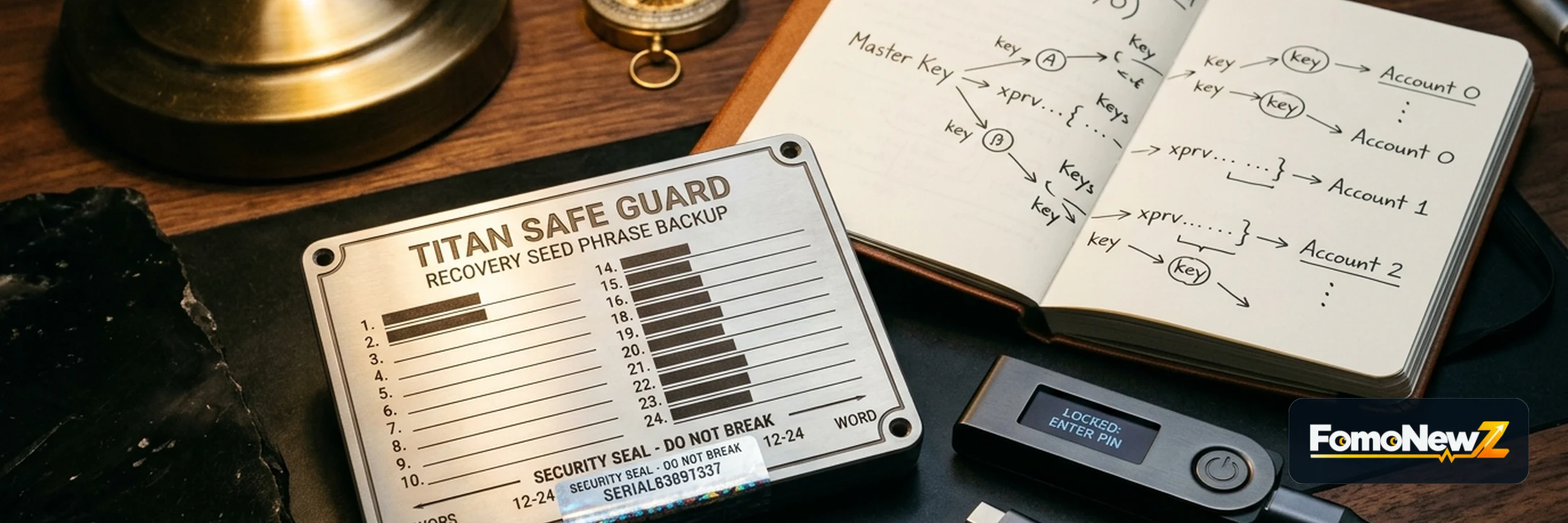
Modern self-custodial wallets implement BIP-32 and BIP-44 Hierarchical Deterministic (HD) architectures. In an HD wallet, your seed phrase passes through a key derivation function (PBKDF2 using HMAC-SHA512 with 2,048 iterations) to create a single 512-bit master seed. From this master seed, an infinite tree of child private keys and public addresses can be deterministically calculated along standardized derivation paths (such as m/44'/0'/0'/0/0 for Bitcoin and m/44'/60'/0'/0/0 for Ethereum).
| Metric | Seed Phrase (Mnemonic) | Individual Private Key | Public Address |
|---|---|---|---|
| Format | 12 to 24 natural words | 64 hexadecimal characters | Alphanumeric string / QR code |
| Standard | BIP-39, SLIP-0039 | ECDSA (secp256k1) / Ed25519 | Base58Check, Bech32, EIP-55 |
| Scope | Restores entire multi-chain wallet tree | Controls exactly one blockchain address | Publicly shared to receive funds |
| Risk Level | Catastrophic if exposed | Severe for that single address | Zero risk (public identifier) |
This hierarchical structure means that backing up a single 12- or 24-word phrase protects all future transactions, change addresses, and tokens across dozens of different blockchains supported by that wallet.
Chapter 03
Safe Storage Standards: Physical Steel vs Digital Vulnerability
The single greatest operational security vulnerability in cryptocurrency self-custody is the digital storage of recovery seeds. If a seed phrase is photographed with a smartphone camera, saved in cloud storage (such as iCloud, Google Drive, or Dropbox), stored in a password manager, or typed onto a keyboard connected to the internet, its security is fundamentally compromised.
Malware, malicious browser extensions, and operating system clipboard monitors actively scan memory for 12- and 24-word combinations. Furthermore, automated cloud backups routinely upload device camera rolls without explicit user awareness, exposing the phrase to remote server breaches.
Industry standard cold storage requires physical, offline permanence. While the paper recovery card included in hardware wallet boxes is adequate for initial setup, paper is vulnerable to house fires, water leaks, mold, and physical degradation. Institutional security practitioners recommend stamping or engraving seed phrases onto marine-grade stainless steel (grades 304 or 316) or titanium backup plates. These metals withstand temperatures exceeding 1,400°C (2,550°F) and resist corrosive saltwater flooding.
Chapter 04
Recovery Limits & The Passphrase (25th Word)
While a seed phrase restores your on-chain assets, it has definitive technical limits that users must understand before relying on it during emergencies:
- On-chain assets are restored: Any native coins (BTC, ETH, SOL) and tokens (ERC-20, SPL) linked to standard derivation paths will reappear once the wallet scans the blockchain.
- Off-chain data is lost: Address book contacts, custom transaction tags, local accounting notes, and unconfirmed transaction memos are stored locally on your device and cannot be reconstructed from the blockchain.
- Lightning Network state: Off-chain payment channels in Bitcoin's Lightning Network require static channel backups (SCBs) in addition to the on-chain seed phrase; restoring only the seed phrase without channel state can result in frozen or lost funds.
- The BIP-39 Passphrase (25th Word): Advanced users often enable an optional passphrase. This string is appended to the salt during the PBKDF2 hashing algorithm, generating an entirely different master seed and wallet tree. This provides plausible deniability against physical coercion (the $5 wrench attack). However, passphrases are not stored anywhere: if you forget your passphrase, even a flawless 24-word backup cannot recover your funds.
Chapter 05
Common Scams, Phishing, and Threat Models
Because a seed phrase grants unrestricted cryptographic access to all assets in a wallet, it is the primary target for social engineering and cybercrime. Understanding the prevailing attack vectors is essential for long-term capital preservation:
- Fake Technical Support: Scammers impersonate Ledger, Trezor, MetaMask, or Phantom support representatives on Discord, Telegram, Reddit, and X. They claim your wallet needs to be 'synchronized,' 're-indexed,' or 'verified' to prevent account suspension, directing you to an external website requesting your recovery phrase.
- Search Engine Phishing Ads: Criminals purchase sponsored search advertisements that mimic official wallet websites. When users download a fraudulent desktop app or browser extension, the software immediately prompts them to 'restore' an existing wallet by entering their seed phrase.
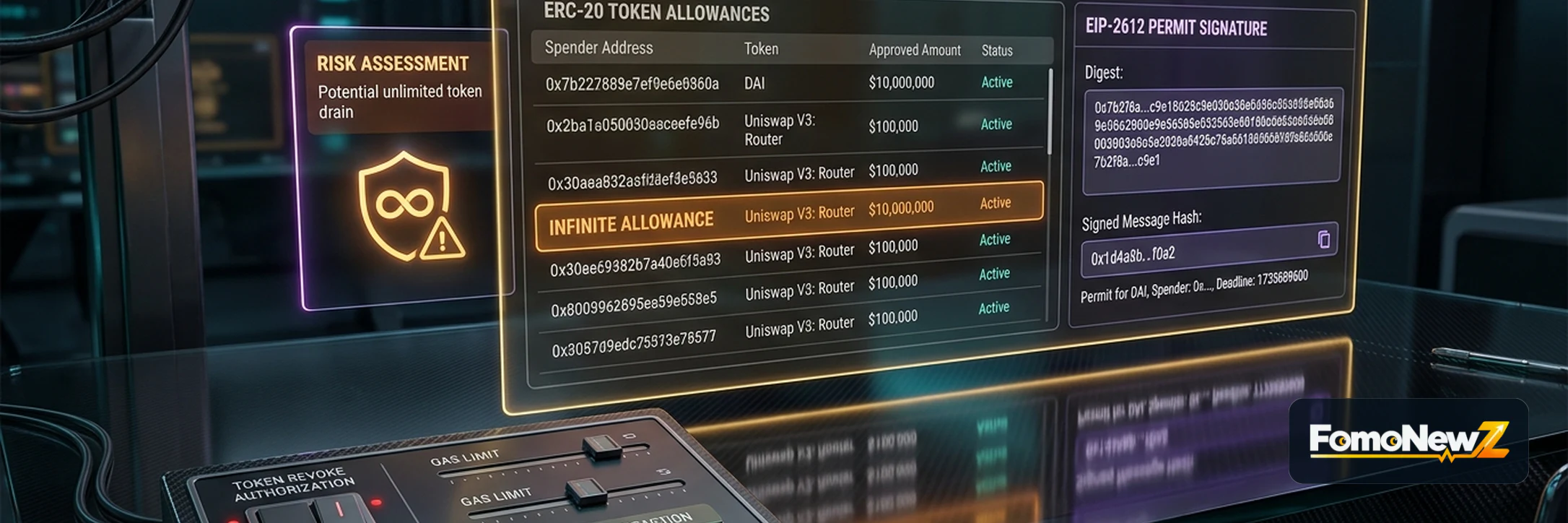
- Malicious dApp Permissions: While malicious decentralized applications usually attack users through excessive smart contract token approvals rather than seed extraction, some fraudulent dApps trigger popups that masquerade as wallet connection errors, claiming the user must 'verify seed ownership' to proceed.
The Golden Rule of Self-Custody: Legitimate wallet software, hardware device manufacturers, and protocol developers will NEVER ask for your seed phrase. Any request to type your seed phrase into a website, web form, email, or chat application is an absolute, guaranteed scam.