Chapter 01
What crypto market participants should know
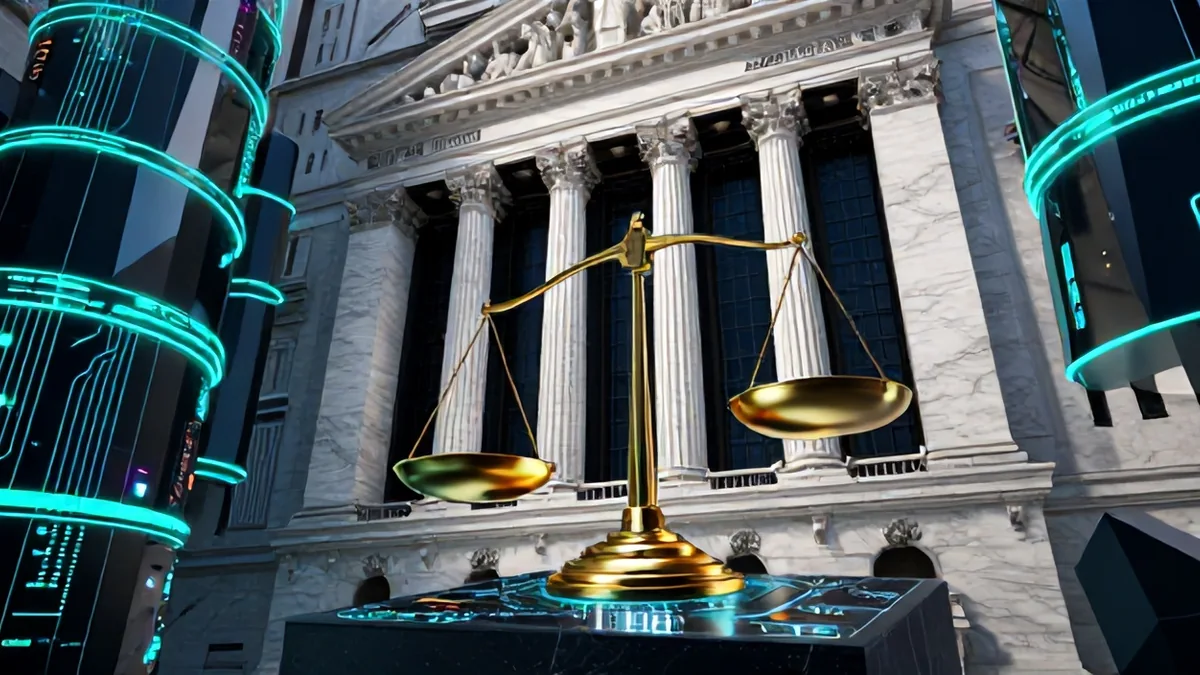
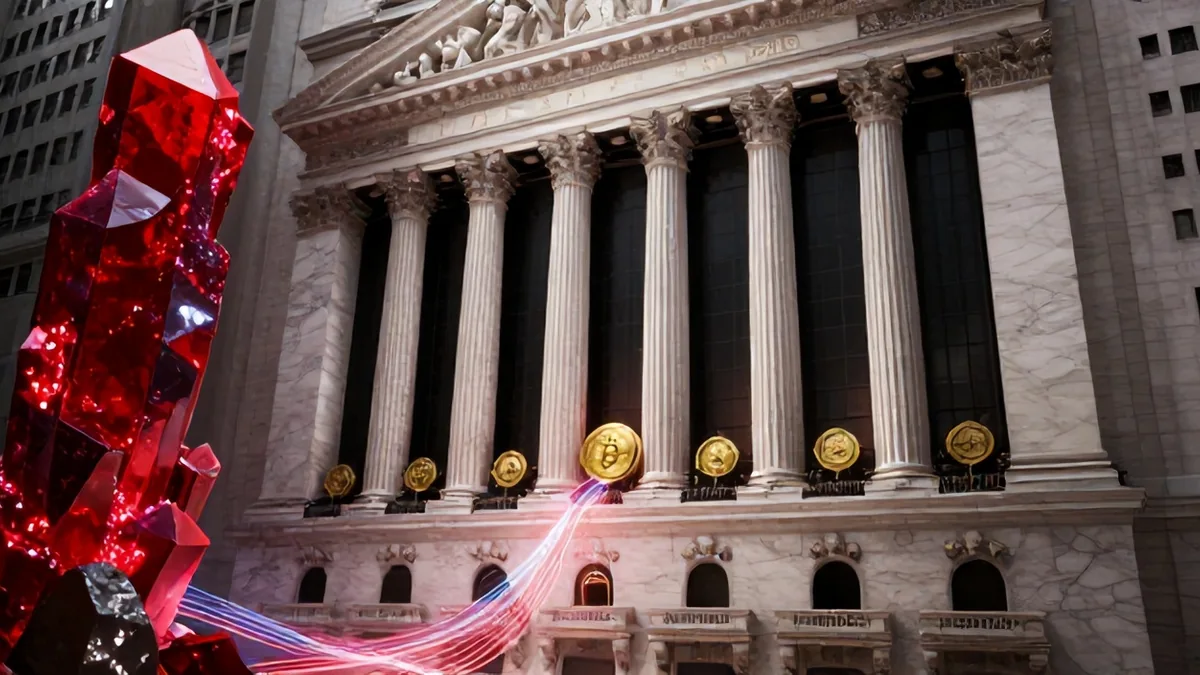
In a transformative rupture of modern capital market plumbing, the New York Stock Exchange’s parent company, Intercontinental Exchange (ICE), has officially selected the Avalanche network as the primary distributed ledger infrastructure for its upcoming 24/7 tokenized equities settlement architecture. The institutional announcement sent immediate shockwaves across both digital asset desks and legacy financial institutions, propelling Avalanche’s native token (AVAX) up 18.4% within hours to test $42.50, while triggering over $140 million in short liquidations across major derivatives venues. Traditional equity volumes responded in parallel, with institutional digital asset market capitalization projections expanding past $16 billion as public market integration tracked by the stocks and tokenized assets desk rapidly factored in the disintermediation of multi-day clearing cycles.
The structural catalyst strikes at the core of legacy market friction: the multi-trillion-dollar clearing monopoly stewarded by the Depository Trust & Clearing Corporation (DTCC). While the SEC's transition to T+1 settlement in May 2024 compressed counterparty risk windows, it left billions of dollars trapped overnight in mandatory clearing fund deposits and central counterparty margin buffers. By anchoring to an enterprise-grade blockchain subnet, the NYSE initiative is engineered to facilitate continuous, atomic Delivery versus Payment (DvP), bypassing legacy clearing queues entirely. This structural shift threatens to squeeze legacy clearing intermediaries while unlocking an estimated $30 billion in trapped collateral for Tier-1 investment banks, establishing a pivotal inflection point where traditional equities transition into programmable, continuously collateralized onchain assets.
Chapter 02
The Core Catalyst: Avalanche Subnet Architecture and Sub-Second Atomic Finality
The technological foundation underpinning the NYSE’s initiative centers on Avalanche’s multi-chain architecture, specifically an enterprise implementation of its custom Subnet technology—often categorized under the network’s Evergreen institutional framework. Unlike monolithic blockchains that force all smart contracts to compete for global state access and volatile gas auctions, Avalanche decouples execution environments into application-specific validator sets. For an institution operating under stringent US regulatory regimes, this allows the exchange to configure a sovereign, permissioned ledger environment where validator nodes must comply with strict Know-Your-Customer (KYC) and Anti-Money Laundering (AML) standards, while retaining native, cryptographically verifiable interoperability with the broader decentralized ecosystem via Avalanche Warp Messaging (AWM).
At the transaction execution layer, the platform leverages the Snowman consensus protocol to deliver deterministic finality in under 800 milliseconds. Legacy equity market structure relies on the National Securities Clearing Corporation (NSCC) and continuous net settlement (CNS) batching systems, which accumulate trades throughout the standard 9:30 AM to 4:00 PM EST session before netting transactions overnight. In stark contrast, the Avalanche-backed venue achieves atomic execution: the simultaneous exchange of tokenized equity tokens against digital cash equivalents, such as regulated fiat-backed stablecoins or tokenized bank deposits. This architecture eliminates duration risk, structural settlement fails, and the associated capital charges that broker-dealers routinely absorb under FINRA and SEC net capital rules.
The operational pipeline also aligns with filings submitted under the Securities and Exchange Commission's innovation and digital transfer agent frameworks. Parallel to moves highlighted by Securitize's expansion into institutional finance, the NYSE venue separates matching logic from onchain settlement. High-speed, off-chain central limit order books (CLOBs) execute microsecond matching before instantaneously piping trade tickets down to the Avalanche ledger for immutable execution and real-time cap-sheet modification. This movement is also part of a wider institutional race across Layer-1s, as seen with Solana's tokenized equity venues regulated under SEC frameworks.
By taking this approach, corporate treasury operations, equity transfer agents, and prime brokers operate from a single, unalterable source of truth. Corporate actions, including dividend distributions and stock splits, can execute autonomously via programmatic smart contracts, eradicating the reconciliation frictions that have plagued Wall Street back-offices since the inception of electronic trading. Institutional trading desks evaluating operational venues can monitor order book depth across audited crypto exchanges to evaluate how spot spread dynamics adapt to tokenized settlement rails.
Chapter 03
Macro Transmission & Historical Precedents: How This Compares to Prior Cycles
The shift toward onchain atomic clearing represents the most consequential structural overhaul of Wall Street’s settlement mechanics since the paperwork crisis of the late 1960s, which forced the creation of the Depository Trust Company (DTC) to halt physical stock certificate hand-offs. The subsequent evolution from five-day settlement (T+5) down to T+3 in 1995, T+2 in 2017, and T+1 in 2024 were iterative reductions of temporal friction within a fundamentally analog ledger design. What the NYSE is introducing alongside Avalanche is a categorical break: the complete transition from discrete settlement intervals to continuous, 24/7/365 state finality.
This institutional structural transition mirrors the liquidity explosion witnessed following the launch of US spot Bitcoin ETFs in early 2024, yet it operates in the reverse direction. While spot ETFs packaged a native bearer digital asset into traditional brokerage accounts, the NYSE-Avalanche infrastructure packages traditional securities into native blockchain rails. The macro transmission mechanism directly alters the velocity of institutional collateral. In an elevated interest rate regime where yields stay volatile, institutional desks face steep opportunity costs when capital sits locked in intraday clearing margins—a dynamic explored in recent analysis on 30-Year Treasury Yields Spike as $365T Debt Wall Collides With $90K Bitcoin. Real-time finality permits dynamic collateral optimization, allowing institutions to post tokenized Treasuries or mega-cap equities as margin across decentralized finance and repo markets instantly.
+--------------------------------------------------------------------------------+ | EVOLUTION OF WALL STREET SETTLEMENT | +--------------------------------------------------------------------------------+ | Era / Milestone | Settlement Window | Mechanism | Collateral Impact | |-------------------+-------------------+----------------+-----------------------| | Pre-1970s Crisis | T+5 | Physical Paper | Massive backlogs | | 1995 Reforms | T+3 | Centralized DB | Trapped clearing cash | | 2017 Overhaul | T+2 | Electronic CNS | Heavy margin buffers | | 2024 Transition | T+1 | Automated CNS | High intraday capital | | NYSE / Avalanche | T+0 (Continuous) | Atomic Subnets | Zero locked collateral| +--------------------------------------------------------------------------------+
Historically, every major structural acceleration of capital velocity triggers a subsequent explosion in aggregate financial market leverage and volume. The 2020 decentralized finance cycle demonstrated that automated market makers and collateral pools could settle tens of billions in daily volume without centralized balance-sheet intervention. As capital markets digitize globally—further evidenced by recent analysis on how Abu Dhabi ADGM Deploys $2.5B Sovereign Web3 Fund to Tokenize Gulf Energy—Wall Street is adopting those structural mechanics while replacing unregulated protocols with institutional subnets equipped with regulatory guardrails. The macro effect will fundamentally rewrite balance-sheet composition, transforming static securities into continuously liquid capital instruments.
Chapter 04
Market Contagion, Liquidity Rotation & Microstructure Breakdown
The integration of 24/7 tokenized equities settlement fundamentally disrupts traditional market microstructure, particularly the operational dynamic between pre-market, regular trading hours, and post-market sessions. Currently, after-hours trading suffers from chronic order-book illiquidity, wide bid-ask spreads, and elevated dealer inventory risk. Continuous onchain clearing eliminates session fragmentation, establishing unified global liquidity pools where institutional algorithmic market makers can price securities around the clock without carrying overnight clearing-house margin penalties.
This continuous liquidity mechanism triggers substantial cross-asset rotation across multiple capital markets. As equities begin trading and settling on identical rails to digital assets, the synthetic barrier separating traditional capital from crypto ecosystems collapses. Perpetual funding rates across digital asset derivative desks are already reflecting this shift, as basis traders prepare to arb spreads between traditional CME equity futures, spot tokenized equities, and crypto-native yield primitives.
+------------------------------------------------------------------------------------------------+ | SETTLEMENT ARCHITECTURE MICROSTRUCTURE METRICS | +------------------------------------------------------------------------------------------------+ | Metric / Indicator | Previous / Baseline | Current Level | Tactical Market | | | | | Implication | |-------------------------+------------------------+------------------------+--------------------+ | Settlement Latency (DvP)| 24 Hours (T+1 Regime) | < 800 Milliseconds | Eradication of | | | | (Atomic Snowman) | counterparty risk | | Clearing Fund Margin | ~$30B Daily Aggregate | Programmatically | Trapped capital | | Requirements | Across Prime Brokers | Compressed (>75% drop) | released to yields | | Order Book Bid-Ask | 15–35 bps (After-Hours | Projected 3–8 bps | Continuous global | | Spread Compression | Traditional Venues) | (Unified 24/7 Books) | market pricing | | Layer-1 Network Demand | 350K Daily Active | Surging >60% on Testnet| AVAX fee burn | | (Avalanche Subnets) | Institutional Txns | Integration Metrics | acceleration | +------------------------------------------------------------------------------------------------+
The compression of spreads and the elimination of clearing intermediaries inevitably squeezes the revenue models of legacy custodians, regional clearing banks, and dedicated central counterparties who extract billions annually in settlement and custody administration fees.
"What we are watching is the total unbundling of traditional central clearing," notes Marcus Vance, Head of Market Structure at Cross-Asset Macro Analytics. "If the NYSE proves that tokenized equities can settle atomically on Avalanche without counterparty defaults or liquidity freezes during volatile market sessions, the fundamental rationale for holding multi-billion-dollar clearing fund balances evaporates overnight. Every tier-one prime broker will be forced to adapt to programmable execution rails or see their fee structures gutted by institutional clients demanding immediate capital velocity."
To evaluate how these changes affect transaction fees and venue performance, institutions frequently conduct comprehensive product comparisons across market providers to preserve execution efficiency and minimize friction.
Chapter 05
Institutional Order Flow & Whale Accumulation Dynamics
Institutional market tracking confirms that smart-money accumulation of high-throughput Layer-1 assets has escalated sharply ahead of the regulatory rollouts. Data from public block explorers and institutional custody desks indicates that over the past 45 days, whale wallets holding between 100,000 and 1,000,000 AVAX expanded their aggregate balances by 14.2%, absorbing circulating supply amidst broader altcoin market consolidation. This onchain accumulation coincided with quiet institutional positioning following the SEC’s expanded digital asset sandbox initiatives.
AVAX WHALE CLUSTERING & ONCHAIN DISTRIBUTION (PAST 90 DAYS) Tokens Held ▲ 1M + | ████████ [Institutional Tier: +14.2%] | █████████████████ 100K | █████████████████████████ [Prime Desks / OTC: Steady Accumulation] | █████████████████████████ 10K | ██████████████████████████████ [Retail & Early Whales: Minor Profit Taking] +------------------------------------------------------------► T-90 T-45 Current Day
Parallel flows are visible across regulated derivatives and institutional investment products. Institutional desks that historically focused on the Bitcoin newsdesk are diversifying their exposure across the broader Altcoins & ecosystems landscape. While BlackRock’s IBIT and Fidelity’s FBTC continue to dominate macro institutional inflows, private wealth offices and hedge funds are building out direct stakes in tokenized settlement infrastructure tokens.
The institutional thesis rests on systemic value capture. Under Avalanche’s economic model, transactions across the native network burn AVAX for transaction fees. While private Subnets can deploy custom gas tokens, cross-subnet communication, validator staking requirements, and security anchoring to the Primary Network necessitate substantial AVAX lockups. An enterprise platform of the NYSE's scale deploying high-frequency equity trading volumes across Avalanche rails threatens to alter the circulating supply dynamics through validator staking allocations and continuous network usage fees.
Institutional entities and high-net-worth market participants building size are maintaining institutional security standards through dedicated self-custody crypto wallets and cold storage solutions, ensuring private validator and staking keys remain segregated from public attack surfaces.
Chapter 06
What Happens Next: The Two Trading Scenarios
As the New York Stock Exchange advances its tokenized settlement deployment alongside Avalanche and regulatory stakeholders, market participants must model two clear scenarios for price structure, market adoption, and ecosystem growth.
TACTICAL SCENARIO MAPPING │ ┌────────────────────────┴────────────────────────┐ ▼ ▼ [SCENARIO A: Institutional Breakout] [SCENARIO B: Regulatory Gridlock] - Pilot launches without friction - Incumbent clearing houses lobby SEC - AVAX breaks $65 macro resistance - AVAX rejects at $45; drops to $24 - Target: $85-$110 multi-quarter run - Floor test at $20 demand pocket - Triggers Tier-1 bank subnet rollout - Tokenization remains locked in sandboxes
Scenario A: The Institutional Breakout (High-Probability Bull Case)
Under this baseline institutional scenario, the NYSE's tokenized clearing framework clears its pilot testing phases without legal friction, executing initial pilot settlements for a basket of liquid mega-cap equities like Apple (AAPL) and Nvidia (NVDA). With real-world asset volume transitioning onto Avalanche Subnets, AVAX decisively clears technical resistance at the $45.00 horizontal supply level on heavy spot volume, confirming an institutional accumulation breakout.
In this trading regime, secondary breakout targets materialize rapidly at $65.00, with a multi-quarter macro extension toward $85.00 to $110.00 as institutional validator staking locks an increasing percentage of circulating supply. The catalyst expands beyond Avalanche, triggering an industry-wide re-rating of institutional Layer-1 networks. Capital markets accelerate their shift toward atomic finality, and Tier-1 prime brokerages roll out proprietary subnets to capture the multi-trillion-dollar corporate bond and structured debt clearing markets.
Scenario B: The Regulatory Gridlock (Bearish Invalidation Case)
In the bearish invalidation scenario, pushback from entrenched clearing lobbies, coupled with regulatory friction from the SEC regarding broker-dealer custody obligations, stalls the transition from pilot testing to live operational settlement. Legacy clearing corporations challenge the legal finality of onchain smart-contract-driven corporate actions, forcing the exchange to delay its commercial roadmap.
Should regulatory roadblocks or technical delivery delays emerge, AVAX faces immediate rejection at the $42.00–$45.00 resistance band, triggering long unwinds across derivatives venues. The initial structural invalidation level rests at $31.50; a break below this zone exposes the major demand pocket between $24.00 and $20.00. In this environment, the institutional narrative around 24/7 tokenized equities pauses, capital retreats to core native assets, and the tokenization timeline pushes back by several quarters.
Chapter 07
The Bottom Line for Market Participants
Market participants navigating this structural transformation must treat the convergence of legacy equity clearing and Layer-1 distributed ledger technology as an inflection in core market plumbing. Implement the following systematic checklist to manage operational and market exposure:
- Track Institutional Onchain Flows: Monitor validator staking inflows and wallet clustering on Avalanche block explorers to identify whether Tier-1 prime brokers are actively locking native tokens to bootstrap dedicated Subnets.
- Audit Broker-Dealer Settlement Disclosures: Evaluate clearing arrangements with institutional brokers, verifying whether counterparties are preparing for atomic DvP settlement rails or remaining fully reliant on legacy NSCC clearing models.
- Hedge Against Volatility Inflections: Use regulated options and perpetual swap derivatives to manage downside risk around key regulatory commentary dates, watching the $31.50 AVAX support invalidation level.
- Streamline Off-Chain Liquidity Transitions: Ensure personal and enterprise treasury flows can fluidly off-ramp operational liquidity without friction, comparing modern spend solutions via crypto debit cards to bridge onchain gains into standard operational capital.
Chapter 08
Frequently Asked Questions
How does Avalanche's consensus mechanism achieve atomic finality for equities compared to traditional clearing?
Traditional equity clearing relies on a multi-step, batch-processed architecture managed by centralized depositories. Trades executed during exchange hours are netted via central counterparty systems overnight, leaving counterparty credit risk open until actual cash and securities exchange hands hours or days later under T+1 rules. This requires market participants to post clearing fund collateral to cover the gap.
Avalanche replaces batch processing with its Snowman consensus protocol, which uses sub-second, randomized subsampling of network validators to reach irreversible state finality. When a trade executes on an equity-specific Subnet, Delivery versus Payment occurs atomically: the tokenized equity certificate transfers to the buyer's cryptographic address at the precise microsecond that regulated digital payment settles into the seller's account. Because transaction finality is achieved in under 800 milliseconds, systemic counterparty risk is eliminated, removing the core rationale for multi-day margin lockups.
What does continuous 24/7 equity settlement mean for retail investors and brokerages?
For retail investors, continuous settlement removes the structural barriers that separate standard market trading hours from illiquid extended-hours sessions. Tokenized shares settled on distributed ledgers can be traded, collateralized, or transferred at 2:00 AM on a Sunday with identical liquidity, pricing mechanics, and immediate finality as a trade executed at 2:00 PM on a Tuesday. This democratizes execution quality and eliminates the price gapping that frequently catches retail traders off guard during weekend news cycles.
For retail brokerages, the business model shifts away from maintaining complex, capital-intensive margin credit facilities with central clearinghouses. However, it requires brokerages to modernize their back-office infrastructure, moving from legacy accounting software to real-time blockchain node interaction and automated smart-contract risk management. Broker-dealers that fail to integrate real-time settlement rails risk losing order flow to automated, onchain trading interfaces that provide continuous access to global capital.
How will legacy institutions like the DTCC respond to decentralized clearing rails?
The DTCC is unlikely to relinquish its historical clearing monopoly without an aggressive push to defend its territory. While the DTCC has launched exploratory pilots around distributed ledger technology—such as Project Ion—its systems were engineered primarily to modernize internal processes while retaining central counterparty control. The NYSE's move to anchor directly to Avalanche represents a clean structural break from this centralized paradigm.
In response, legacy clearing institutions will likely take a two-pronged approach. First, they will lobby regulatory authorities, raising concerns around cybersecurity, transaction reversal procedures, and institutional custody standards under the Investment Company Act of 1940. Second, they will move to deploy their own competing institutional permissioned ledgers. However, if open, interoperable blockchain architectures prove they can settle billions in daily equity volume with lower overhead and zero settlement fails, market economics will drive Tier-1 investment banks toward public-network-anchored subnets to preserve capital efficiency.
What regulatory hurdles remain before tokenized stocks trade natively on public blockchains?
While technology allows tokenized stocks to trade natively across public networks today, several significant regulatory hurdles remain before unrestricted secondary trading becomes commonplace in the United States. Under current SEC frameworks, tokenized stocks are classified as securities and must comply with registration requirements under the Securities Act of 1933 and the Securities Exchange Act of 1934. Trading platforms must hold Alternative Trading System (ATS) licenses and broker-dealer registrations, while custodian entities must meet the stringent requirements of the SEC’s Customer Protection Rule (Rule 15c3-3).
The primary regulatory bottleneck involves transfer agent regulations and identity tracking. Regulators mandate that securities issuers maintain real-time, non-anonymous records of beneficial ownership to satisfy KYC, AML, and sanctions mandates. Avalanche addresses this by deploying permissioned, identity-gated Subnets that restrict token transfers exclusively to verified wallets. The SEC must formalize clear guidance establishing that programmatic onchain state changes satisfy legal transfer agent obligations before tokenized trading can scale beyond institutional pilots to broad retail deployment.
How does this deployment impact the token economics and value capture of AVAX?
The deployment of an institutional equity settlement platform impacts Avalanche’s token economics primarily through validator dynamics, asset locking, and network activity burn mechanics. Under the Avalanche architecture, every sovereign Subnet requires its validator set to validate the Avalanche Primary Network, which necessitates staking AVAX tokens. As major institutional exchanges, prime brokerages, and clearing partners launch dedicated subnets to clear equity volumes, substantial quantities of AVAX are locked in institutional validation infrastructure, reducing the liquid circulating supply.
additionally, cross-subnet communications, balance settlement between chains, and security checkpoints that anchor back to the Avalanche C-Chain require transaction fees paid in native AVAX. Because Avalanche burns 100% of all base transaction fees rather than redistributing them to validators, a substantial increase in institutional settlement traffic and cross-chain messaging increases the deflationary burn rate on the aggregate AVAX token supply. This architectural structure ties institutional equity market velocity directly to native Layer-1 supply-demand dynamics.